The Complete Guide to Industrial Work Positioners: Welding, Assembly, and MRO
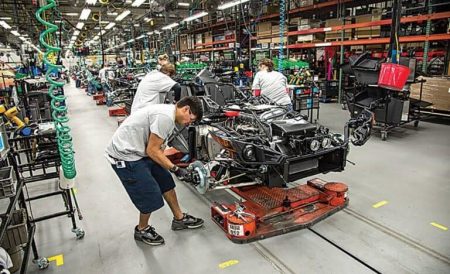
In modern manufacturing, the difference between a profitable operation and a bottlenecked facility often comes down to how effectively a workpiece is presented to the operator or the robotic arc. Industrial work positioners have evolved from simple rotating turntables into sophisticated systems that dictate the flow of production, the quality of fabrication, and the safety of the workforce. By transforming static parts into dynamic, manageable assets, these tools act as the primary engine for throughput and consistency. This guide explores the strategic importance of work positioners across welding, assembly, and MRO environments, detailing how they function as critical infrastructure for global companies.
Beyond the Turning Table: The Strategic Value of Modern Work Positioners
Defining the Positioner as a Productivity Engine
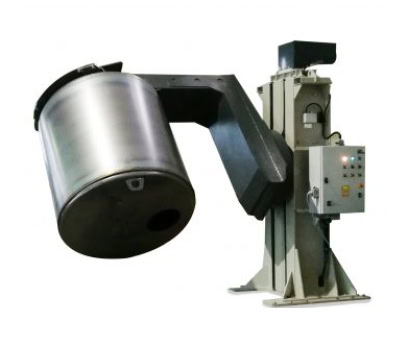
A work positioner is more than a rotating support; it is a precision system designed to manipulate complex geometries into optimal working angles. In a high-speed manufacturing environment, every second spent manually repositioning a heavy chassis or pipe segment is time lost. By integrating positioners into the floor layout, facilities can synchronize movement with welding cycles, effectively turning idle handling time into productive “arc-on” time.
Impact on Ergonomics, Operator Fatigue, and Workplace Safety
The physical toll of manual material handling in welding and assembly is a major driver of talent attrition and insurance costs. Positioners mitigate this by keeping the weld pool in a comfortable, gravity-defying zone, preventing operators from crouching, stretching, or holding awkward positions. This ergonomic enhancement is not just a comfort feature; it is a critical safety strategy that reduces strain-related injuries and ensures long-term operator retention.
The “Arc-Off” Time Problem: How Positioning Dictates Throughput
“Arc-off” time represents the period during which equipment is idle. In many shops, this accounts for up to 70% of the total production cycle. High-performance positioners minimize this by allowing for rapid index adjustments, enabling the operator to transition between segments of a build without stopping to manually rotate the workpiece. When companies optimize their systems to reduce this downtime, the increase in total parts per shift is immediate and measurable.
Technical Anatomy: The Engineering Behind Precision Movement
Drive Systems: Comparing AC, DC, Servo, and Stepper Motors
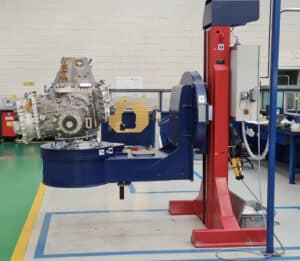
The heartbeat of any positioner is its drive system. AC motors offer reliability and high torque for heavy-duty industrial environments, while DC motors provide smoother control in variable speed applications. Servo motors have become the standard for precision-critical and robotic integration due to their ability to provide instantaneous, high-resolution feedback. Stepper motors are often reserved for lower-cost, light-duty applications where high torque at low speeds is not the primary requirement.
The Role of Encoders and Feedback Loops in Repeatable Accuracy
For high-end fabrication, repeatability is paramount. Encoders provide a closed-loop system that communicates the exact angular position of the table to the control unit. This ensures that even after thousands of cycles, the positioner stops exactly at the programmed coordinate, which is critical for projects involving complex seam tracking or multi-pass welding.
Control Systems: From Manual Foot Pedals to Programmable Logic Controllers (PLCs)
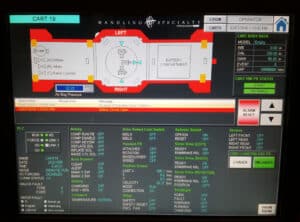
Modern control interfaces range from simple variable speed dials and foot pedals to complex PLCs. Advanced systems allow for “jog” functions and preset positioning, which enable operators to store specific rotation patterns for repetitive assemblies. This reduces the cognitive load on the operator, ensuring that every assembly is processed with identical parameters.
Essential Components: Ground Connections, Chucks, and Live Centers
The mechanical integrity of the positioner relies on its specialized components. A robust ground connection is non-negotiable for arc welding to prevent arcing through the bearings, which would lead to premature failure. Similarly, self-centering chucks and hydraulic live centers ensure that round parts remain perfectly aligned during rotation, preventing wobble that could ruin a weld bead.
Achieving Weld Perfection: Connecting Positioning to Arc Quality
The Physics of the “Down hand” Position: Optimizing GMAW, TIG, and FCAW
Welding in the “1G” or flat “down hand” position allows for higher deposition rates, better penetration, and reduced risk of porosity. By using a positioner to keep the molten puddle flat, welders can maximize their machine’s settings, ensuring that gravity works with the wire instead of against it.
Managing Heat and Consistency with Variable Rotation Speeds
Consistent rotation speed is the secret to uniform bead appearance and heat management. If the rotation is too fast, the weld becomes shallow; too slow, and the heat builds up, potentially causing burn-through. Advanced positioners allow for precise speed adjustments, keeping the heat-affected zone (HAZ) consistent throughout the entire weld path.
Advanced Features: Craterfill Timers and Programmable Rotation Distance
Many modern positioners include built-in timers that work in tandem with the welding power source. Features like “craterfill” allow the machine to ramp down the current at the end of a rotation, preventing weak points. Programmable rotation distance ensures that the weld starts and ends at the exact required points without human error.
Specialized Applications: Pipe and Tube Welding, Flanges, and Heavy Chassis Fabrication
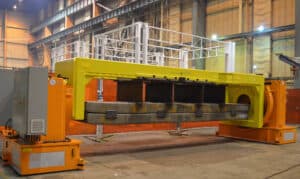
In industries like aerospace and shipbuilding, the complexity of the workpiece requires multi-axis positioning. For pipe welding, tilt-rotary systems are essential for maintaining consistent weld geometry around curved surfaces, ensuring that every joint meets rigid code requirements.
Strategic Selection: Matching Equipment to Industrial Demands
Calculating Load Capacities and Center of Gravity (CG)
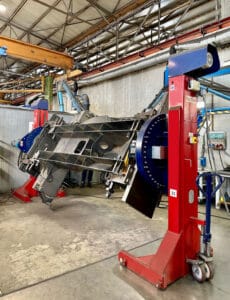
Selecting the right positioner requires a thorough understanding of the workpiece’s load capacity and, more importantly, its center of gravity. A positioner that handles 500 lbs centered might fail under 200 lbs if the load is off-balance or extended too far from the axis of rotation. Companies must evaluate the maximum torque requirements to prevent motor burnout and mechanical damage.
Degrees of Freedom: Evaluating Tilting, Rotating, and Pivot Options (Joint J1, J2)
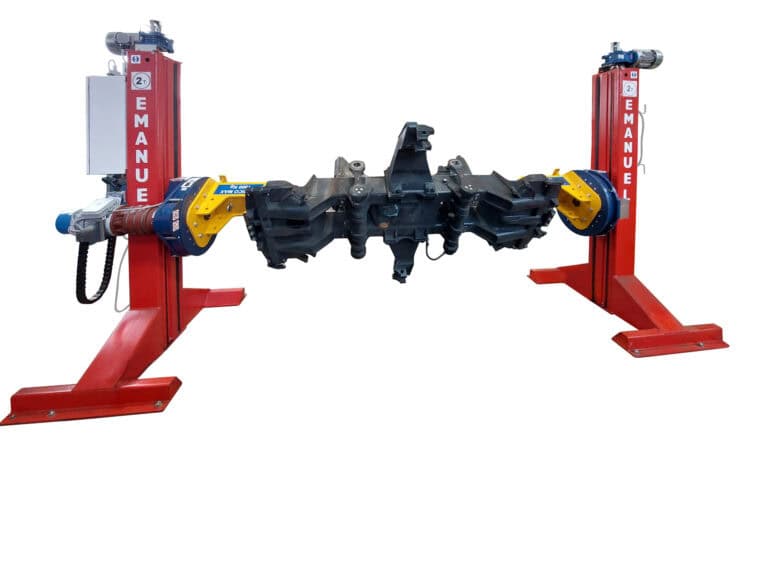
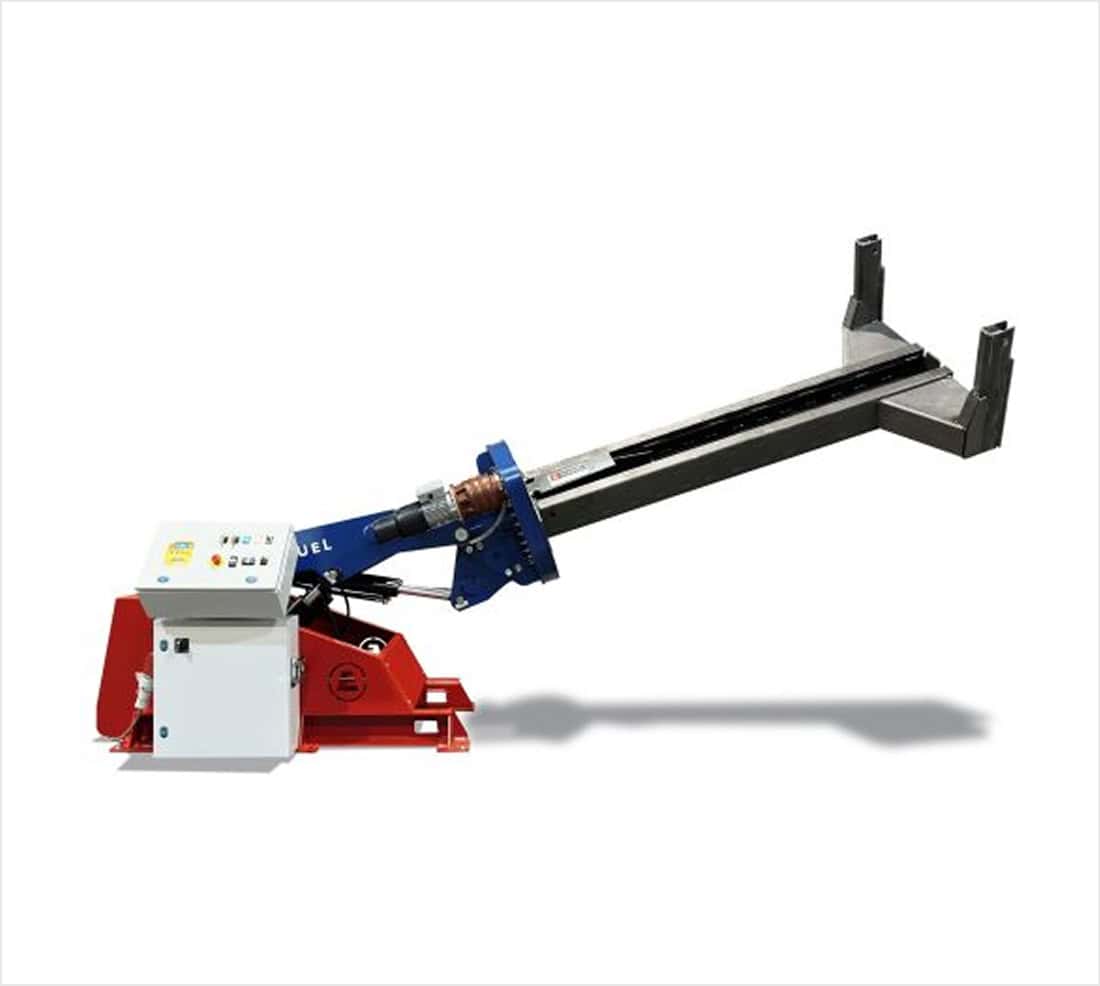
A single-axis positioner is sufficient for simple rotation, but complex chassis fabrication often requires two-axis or “tilt-rotate” configurations. By providing J1 (rotation) and J2 (tilting) capabilities, the positioner allows for complete spatial orientation, which is crucial for internal and external weld access.
Flexibility vs. Fixed Automation: When to Use Manual vs. Automatic Positioners
Manual systems are cost-effective for job shops with high product variety. However, for mass production, automatic systems that integrate with the facility’s PLC architecture are essential. The decision rests on the “batch size” versus the “changeover time.”
Workpiece Geometry: Choosing the Right Clamps and Fixturing Accessories
The best positioner is useless if the part cannot be held securely. Custom fixturing, toggle clamps, and quick-release magnets are essential components that dictate how quickly an operator can load and unload materials, directly influencing the daily throughput.
Integrating Positioners into the MRO (Maintenance, Repair, and Operations) Lifecycle
The Positioner as a Critical Asset: Impact on Facility Downtime
In an MRO facility, the positioner is a foundational tool. If it fails, repairs stall. Viewing the work positioner as a mission-critical asset—rather than just an accessory—promotes a culture of proactive care. Downtime in MRO, particularly in aviation or heavy rail, carries massive financial penalties, making the reliability of the positioner a top-tier operational priority.
Preventive Maintenance Schedules for Bearings, Gearboxes, and Sensor Wiring
Preventive maintenance (PM) is the difference between a long equipment lifespan and a mid-project breakdown. Regular lubrication of gears, inspection of bearings for debris, and checking sensor wiring for cable fatigue are essential tasks. Dust and metal particles from the shop floor can be lethal to electronics; therefore, routine cleaning of control housings is vital.
Troubleshooting Common Issues: Weld Path Variation and Digital Display Errors
If a weld path drifts, the technician must check for loose bolts, gear backlash, or encoder slippage. Digital display errors often stem from ground interference or damaged signal cables. Documenting these faults in a digital maintenance log helps predict when components will need replacement.
Predictive Maintenance: Monitoring Duty Cycles and Motor Health
Industry 4.0 has brought “smart” monitoring to positioners. By tracking motor temperature and duty cycles, maintenance teams can identify potential failures before they occur. This predictive approach saves thousands in emergency repair costs and ensures that the facility remains operational during high-demand periods.
Defining Valid Weld Positions within Range for Robotic Arms
The robotic arm has a specific “reach envelope.” The positioner must be strategically placed to ensure the robot can access all necessary joints without exceeding its joint limitations. Effective planning of the work cell layout is therefore an architectural exercise in geometry and reach.
The Future of Autonomous Positioning in CNC Machining and Assembly
As we look toward the future, autonomous positioning is moving beyond welding. In CNC machining, adaptive work positioners for welding are being used to orient parts for multi-face milling without manual re-clamping. This shift toward “lights-out” manufacturing relies on the ability of the positioner to receive and execute commands autonomously, further cementing its role as the backbone of modern industrial efficiency.
Conclusion
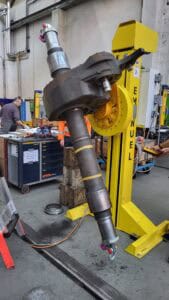
The industrial work positioner has transcended its traditional role to become a centerpiece of modern manufacturing productivity. By strategically selecting the right systems, companies can significantly reduce arc-off time, improve weld quality, and ensure the long-term safety and retention of their skilled workforce. From the precision of robotic cells to the heavy-duty demands of MRO, these tools are essential for any business aiming to scale its operations while maintaining high standards of quality. To maximize your return on investment, focus on integrating these positioners into your facility’s preventive maintenance schedules, and prioritize modular, scalable equipment that can grow alongside your production needs. Investing in high-quality positioning is not just an equipment purchase; it is a fundamental commitment to operational excellence and sustainable manufacturing growth. Moving forward, the integration of digital twin technology and autonomous positioning will continue to define the industry, separating the leaders in manufacturing from those struggling with inefficient, manual workflows.
Talk to Handling Specialty about your next custom work positioner for welding operations.