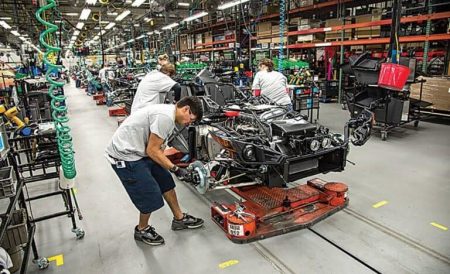
End-to-End Material Handling Process Optimization
Modern operations that view material handling as a competitive advantage are outperforming their peers by transforming every movement of goods into an opportunity for data collection, speed, and accuracy. This guide serves as a design for leadership teams looking to move beyond simple cost-cutting and toward end-to-end supply chain excellence.
Redefining Material Handling: From a Cost Center to a Competitive Advantage
The Shift Toward Holistic Intralogistics
The traditional view of intralogistics was siloed: storage was separate from transport, and procurement was disconnected from final delivery. Holistic intralogistics integrates these functions into a single, cohesive ecosystem. By viewing the warehouse as a nervous system, companies can ensure that every automated guided vehicle movement, forklift actions, and software ping serves the ultimate goal of seamless order fulfillment. This shift requires abandoning departmental silos in favor of a cross-functional strategy that prioritizes the velocity of goods over the mere storage of inventory.
Why Incremental Improvements Aren’t Enough in Modern Supply Chains
Incrementalism—such as simply buying a faster lift truck or expanding a storage rack—often masks underlying systemic flaws. If your baseline processes are inefficient, faster equipment only accelerates the production of waste. True optimization requires a fundamental reassessment of how material enters, resides within, and exits the facility. In an era where labor costs are rising and customer expectations for delivery speed are at an all-time high, radical process re-engineering is no longer a luxury; it is a prerequisite for survival.
Phase I: The Discovery Audit—Assessing Capacity and Operational Baselines
Conducting a Thorough Capacity Analysis and Planning Session
Before implementing new technology, you must understand your current ceiling. A capacity audit evaluates your facility’s ability to handle peak load without buckling. This involves mapping out the physical throughput of your receiving docks, the storage density of your racking systems, and the output limits of your assembly areas. Strategic planners should identify the “theoretical maximum” versus the “achievable reality” to determine if your constraints are mechanical, human, or digital.
Analyzing SKU Density and Material Flow Patterns
Applying ABC analysis to warehouse layouts: Positioning high-velocity ‘A’ SKUs near shipping docks streamlines material flow and eliminates the chaotic ‘spaghetti’ travel paths of unoptimized facilities.
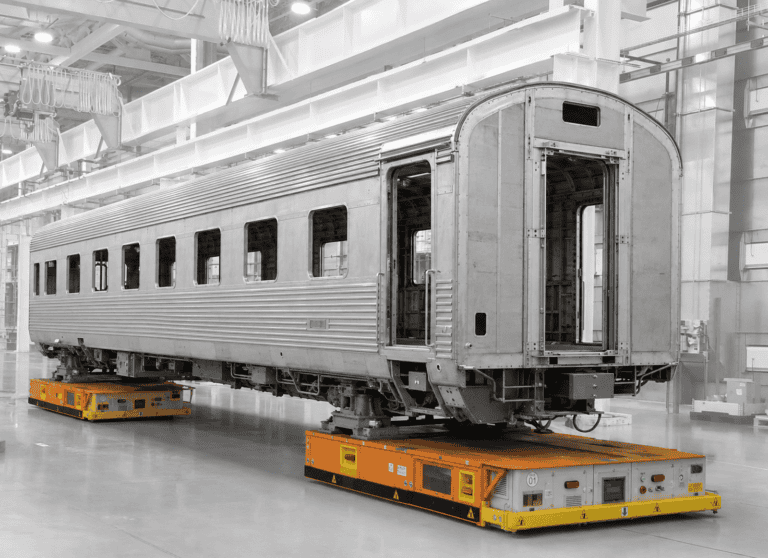
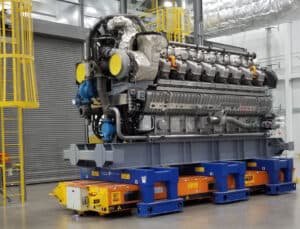
Not all inventory is created equal. Applying ABC analysis—the Pareto Principle of inventory management—allows you to categorize SKUs based on their velocity. High-velocity items should be positioned nearest to shipping docks or automated retrieval zones to minimize travel time. By analyzing flow patterns, you can visualize the “spaghetti diagrams” of your current operations. If your forklifts are traversing excessive distances for low-turnover goods, your layout is failing you. This is an opportunity to upgrade to AGV systems that will offer precise positioning and movement of goods in an efficient and safe manner by utilizing a preprogrammed path.
Identifying Bottlenecks: From Manual Labor Constraints to Mechanical Failure Points
Bottlenecks are often invisible until they cause a total system stall. A rigorous audit uses downtime data to identify the precise points where material piles up. Is the constraint a manual verification process at the intake stage? Is it an aging conveyor line that lacks sensors to monitor load balance? Pinpointing the difference between a process bottleneck (waiting for a signature) and a mechanical failure point (a motor malfunction) is the first step toward effective remediation.
Phase II: Architecting the Physical Flow—Lean Principles in Material Design
Implementing First-In, First-Out (FIFO) and Just-in-Time (JIT) Workflows
FIFO is essential for minimizing spoilage and obsolescence, while JIT keeps inventory costs low by synchronizing supply with demand. Integrating these principles into your material handling systems requires a synchronized flow where raw materials are pulled into the production line exactly when needed. This reduces the footprint of work-in-progress (WIP) goods, freeing up valuable floor space for value-added activities rather than storage.
Optimizing Storage Zones: Maximizing Vertical Space and High-Velocity Areas
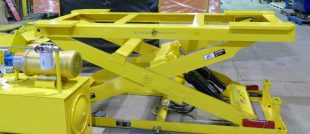
Warehouse real estate is a premium asset. When floor space is limited, the only way to grow is up. Utilizing vertical storage—such as automated vertical lift modules or high-bay racking—multiplies your storage capacity without increasing your facility’s square footage. By designating zones based on throughput velocity, you ensure that high-demand goods occupy the most accessible “Golden Zone” of the facility. This is where AGVs fitted with scissor lifts and other automated tooling can offer significant efficiencies over traditional stackers and forklifts.
Streamlining the Production Flow: From Raw Materials Intake to Finished Goods
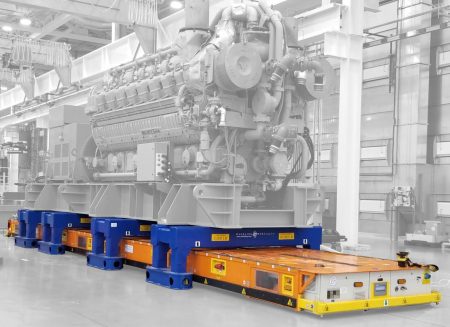
The path from receiving to shipping should be a straight, non-intersecting line. Crossing traffic; where inbound raw materials clash with outbound finished goods, is a safety hazard and a productivity killer. A well-designed production flow minimizes handling points. Every time an object is picked up and put down, costs increase. An optimized facility treats the movement of materials as a continuous, uninterrupted stream. This is why AGV systems offer a one-size-fits -all solution. AGVs move raw product into the assembly line through to packaging and shipping.
Phase III: Bridging the Digital-Physical Divide with Intelligent Software
The Nervous System: Integrating ERP, WMS, and Warehouse Execution Systems (WES)
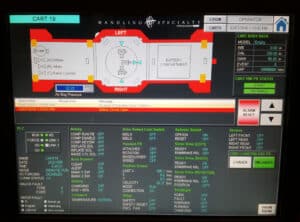
Without a digital backbone, physical optimization is impossible. An Enterprise Resource Planning (ERP) system handles high-level procurement, but it rarely manages the granular details of floor activity. A Warehouse Management System (WMS) tracks inventory, but a Warehouse Execution System (WES) serves as the “control tower,” orchestrating the movement of goods in real-time. Integrating these layers ensures that instructions sent from the top reach the floor machinery instantly.
Achieving Real-Time Visibility through IoT Smart Sensors and RFID Tags
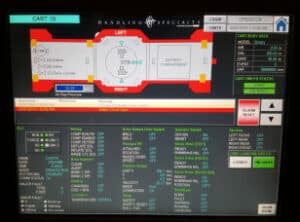
Real-time visibility transforms reactive management into proactive control. RFID tags on pallets allow you to track inventory movement with 99%+ accuracy, eliminating manual counting errors. Coupled with IoT smart sensors on AGVs, you can monitor the health of your equipment. If a motor begins to vibrate beyond a standard threshold, the system triggers a maintenance ticket before the unit fails, preventing costly downtime.
Utilizing Digital Twin Simulations for Layout Testing and Emulation
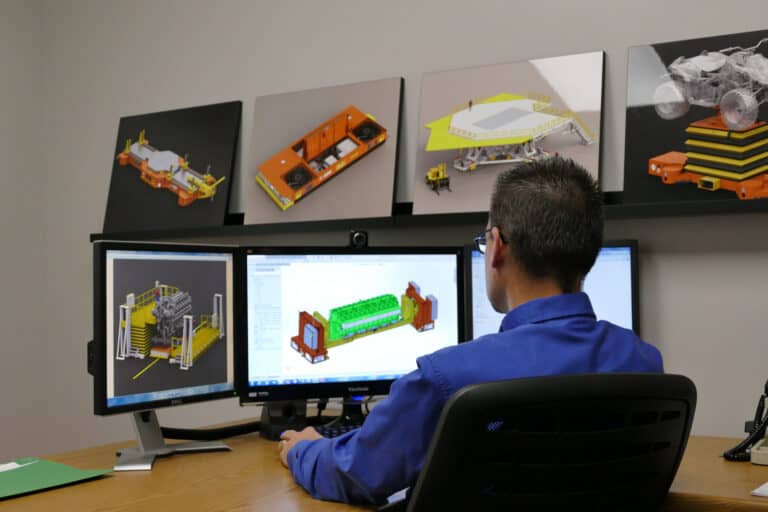
Before making costly physical changes, test them in a virtual environment. A digital twin is a software-based replication of your warehouse. You can simulate changes in layout or the introduction of new robots and automated guided vehicles to see how they impact overall system throughput. This risk-free testing environment allows you to refine your strategy before spending a single dollar on hardware.
Phase IV: Strategic Automation Selection—Matching Technology to Task
Automated Intake Systems and Pneumatic Conveyance for Bulk Ingredients
For manufacturers dealing with bulk raw materials, manual handling is often inefficient and messy. Automated intake systems, including AGVs and MGVs, move materials through closed loops, reducing contamination risks and labor requirements. This level of automation creates a closed-system approach that is both cleaner and significantly faster than manual dumping or manual movement.
Goods-to-Person (G2P) Storage and Picking Systems vs. Traditional Retrieval
G2P systems flip the script on traditional picking. Instead of a worker walking to a shelf, the inventory travels to the worker. This eliminates miles of unnecessary walking for pickers and drastically improves order fulfillment accuracy and safety. While traditional retrieval systems may work for low-volume businesses, G2P is the gold standard for facilities managing thousands of SKUs where speed and error-reduction are critical.
The Role of Autonomous Mobile Robots (AMRs) and Automated Guided Vehicles (AGVs)
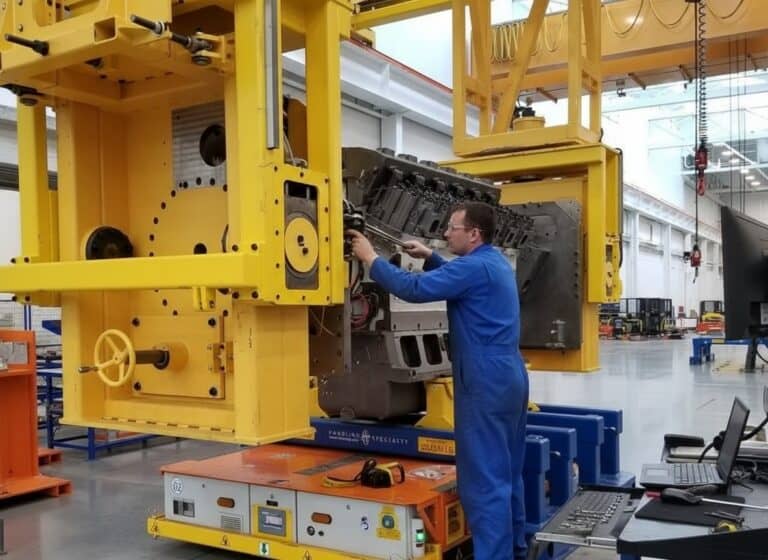
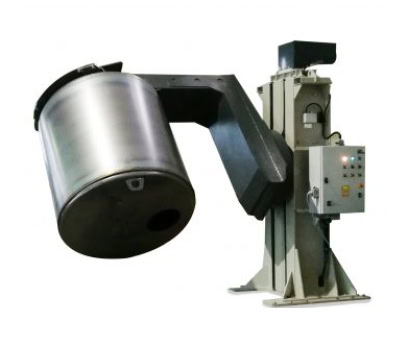
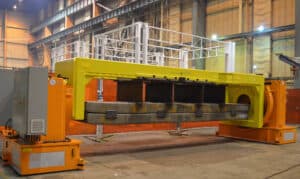
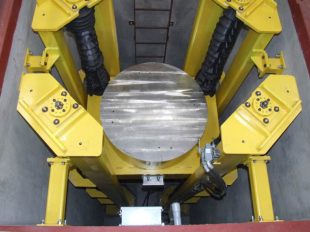
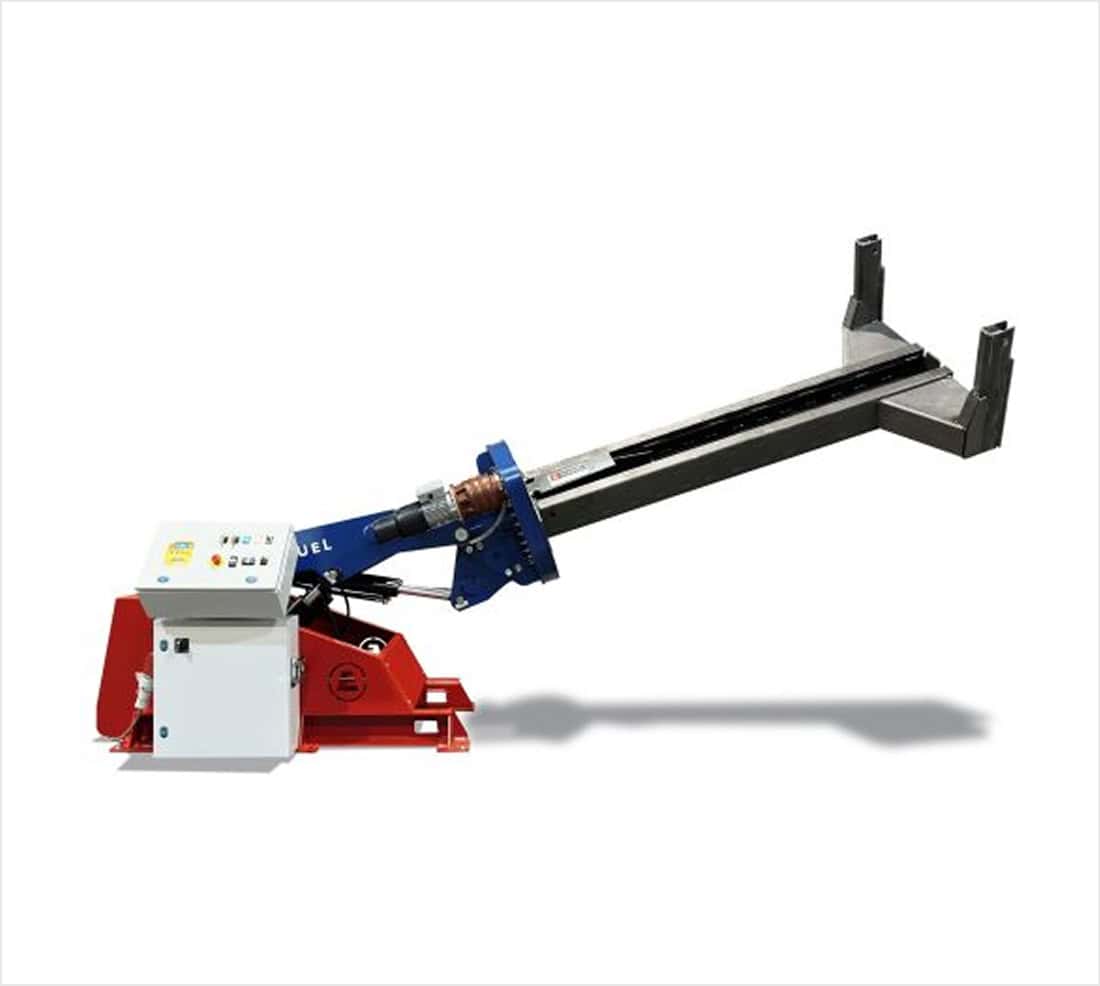
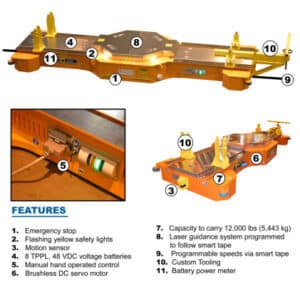
AMRs and AGVs act as the flexible arteries of the modern warehouse. Unlike fixed conveyor systems, AMRs can navigate dynamically, rerouting around obstacles to deliver parts exactly where they are needed. Fitted with custom tooling, these systems can offer precise positioning via rotators, turn tables, scissor lifts, tilters roller tops, and more to the unit’s platform. They are ideal for facilities with changing layouts, as they do not require permanent physical infrastructure changes to adapt to new routes.
Phase V: The Human-Machine Interface—Cobots and Ergonomics
Collaborative Robots (Cobots) in Order Fulfillment and Palletizing
Cobots are not designed to replace humans, but to augment them. In palletizing, a cobot can handle the repetitive, heavy lifting, while the human worker focuses on quality control and complex tasks. This partnership reduces fatigue-related accidents and allows workers to operate in a more ergonomically friendly environment, directly impacting long-term labor retention.
Reducing Labor Costs while Enhancing Worker Product Integrity
Automating the “dull, dirty, and dangerous” tasks allows you to redirect labor to higher-value roles. By reducing physical strain, you lower the incidence of worker injury, which in turn reduces insurance and turnover costs. A safer, more productive workplace is a powerful recruitment tool in a competitive labor market.
Augmented Reality (AR) and Pick-by-Voice Solutions for Order Picking Accuracy
AR headsets and voice-directed picking systems provide workers with real-time, hands-free guidance. By overlaying picking instructions directly into the worker’s field of vision, you remove the need for paper pick-lists and manual scanners. This leads to higher accuracy rates, reducing the expensive costs of return logistics caused by picking errors.
The “Brownfield” Strategy: Retrofitting and Retooling Legacy Systems
Upgrading Legacy Equipment with Encoders and Diffusion Sensors
You do not need to tear down a building to modernize. Many legacy conveyors and forklifts can be replaced with modern technology. By replacing outdated forklifts and conveyor systems with automated guided vehicles, you can transform dumb hardware into data-generating assets. This incremental digital transformation is far more cost-effective than maintaining old equipment that does not conform to todays standards.
Vendor Management and the Lifecycle of Installation and Commissioning
Vendor relationships are critical when upgrading legacy sites. You need partners who specialize in brownfield integration—companies that understand how to install new tech without disrupting current, live operations. Demand a clear, phased commissioning schedule that ensures the system is stable before the full load is applied.
Data-Driven Decision Making: Moving from Reactive to Predictive
Leveraging AI and ML Algorithms for Predictive Analytics
The final stage of optimization is the transition from “what happened” to “what will happen.” Machine Learning (ML) algorithms analyze historical throughput data to predict seasonal surges and potential system failures. By anticipating these events, managers can staff shifts more effectively and schedule maintenance during quiet periods. This predictive capability shifts the entire material handling operation from a reactive cost center to a forward-looking, high-performing strategic engine.
Conclusion
The journey toward end-to-end material handling optimization is not a one-time project but a continuous cycle of auditing, integrating, and evolving. By shifting from a focus on individual tasks to a holistic view of the intralogistics nervous system, you can turn your warehouse, assembly, MRO, or manufacturing facility into a competitive advantage. Start by conducting a rigorous audit of your SKU density and flow patterns, then prioritize the digital connectivity of your assets before jumping into heavy automation.
As you implement these strategies, remember the importance of the human-machine interface; automation succeeds when it empowers your workers rather than merely replacing them. Whether you are operating a legacy brownfield site or designing a state-of-the-art facility, the core principle remains the same: treat material handling as a strategic process that drives value. Begin by mapping your current bottlenecks, selecting technologies that offer the highest ROI for your specific operation, and leveraging data to make decisions that look toward the future. By following this blueprint, you are not just managing inventory—you are scaling your business for long-term success.