Custom Automated Guided Vehicle Systems in Data Centers
The Criticality of Strategic Material Handling in Data Centers
Data centers are the digital hearts of the global economy, processing and storing the vast streams of information that power modern life. As the global data center market grows, expected to reach $398.80 billion by 2029, the pressure to optimize every facet of their operation intensifies. While much focus is placed on computing power and network speed, the physical logistics of managing high-value IT assets—strategic material handling—is a frequently underestimated yet critical component of efficiency, security, and uptime. This is not the logistics of a standard warehouse; it’s a high-stakes environment where a minor physical mishap can trigger a major digital catastrophe
Modern data centers power everything from cloud computing to online banking. With this immense responsibility, data centers require not only reliable infrastructure but also efficient maintenance practices.
Why Material Handling Matters in Data Centers
Not unlike typical warehouses or manufacturing plants, data centers operate in highly controlled environments where uptime, precision, and safety are paramount. Equipment failures or mishandling during maintenance can result in costly downtime, data loss, and potential safety hazards. Material handling tools and machinery ensure that technicians can safely move, position, and service heavy or sensitive equipment without disrupting operations.
Key Types of Material Handling Maintenance Equipment in Data Centers
- Server and Equipment Lifts
- Transport Systems
- Robotics and Automated Systems
- Cable Handling Equipment
Each of these above have a place in data centers to assist technicians in safely and efficiently moving and positioning servers, cables, storage systems, networking equipment, as well as cooling, and power infrastructure.
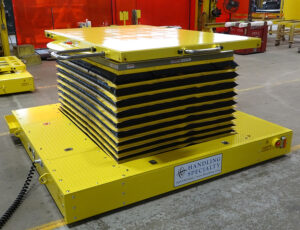
Not every data center is designed to operate like the one before. Custom material handling equipment is an essential service in realizing the most successful, modern data center.
Server and Equipment lifts are specialized material handling equipment for data centers, but not all are made with your data center in mind. Additionally, these units are limited in their customization. A Manually Guided Vehicle (MGV) replaces sever lifts and adds a myriad of options and tooling to create a far simpler, safer, and efficient process.
Standard pallet jacks and forklifts, while useful in a general warehouse setting, lack the precision, cleanliness, and specialized features required for data center operations. The risks of electrostatic discharge (ESD), vibration, and contamination are far too high, demanding a tailored approach to material handling that prioritizes asset protection over raw speed.
Space Constraints and Maximizing Footprint Efficiency
Data center floor space is expensive real estate. Every square foot is optimized for server racks and cooling, leaving narrow aisles and tight quarters for moving equipment. Custom material handling solutions must be compact, maneuverable, and often capable of vertical movement to maximize the use of available space. This efficiency is increasingly managed by Data Center Infrastructure Management (DCIM) software.
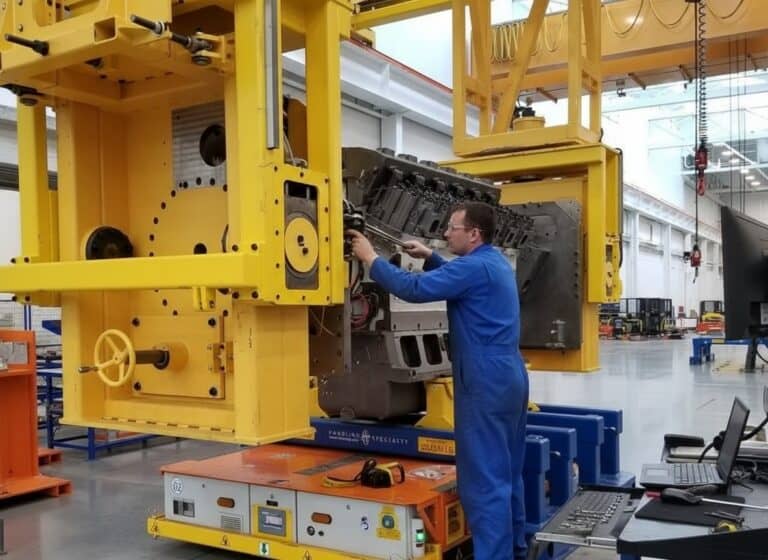
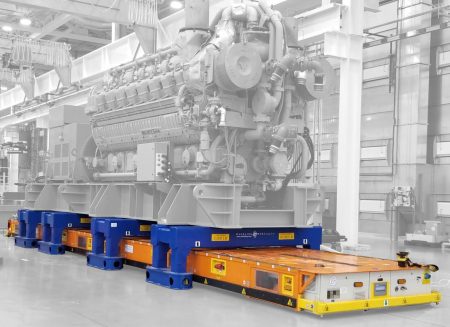
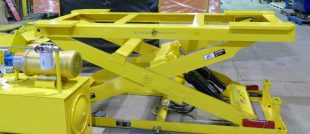
MGVs for Data centers can incorporate ESD-safe materials, vibration-dampening features, and the ability to operate within cleanroom-like conditions while guided through the data center via a wireless, handheld controller. The server or rack being positioned is then lifted on stable scissor lifts embedded on the MGV, and the product placed with ease as it is moved carefully across a smooth rollerball platform.
Human Error: A Persistent Threat in Manual Operations
As precise and important as MGVs are in Data center equipment handling, manual handling introduces the variable of human error. A moment of inattention can lead to a dropped server, an incorrect connection, or a safety incident. While technicians are highly skilled, the physical strain and repetitive nature of moving heavy equipment increase the risk of mistakes. Automation in material handling is a direct countermeasure to this persistent threat. In this case, an Automated Guided Vehicle or vehicles (AGVs) are another solution that increases efficiency and safety in your Data center.
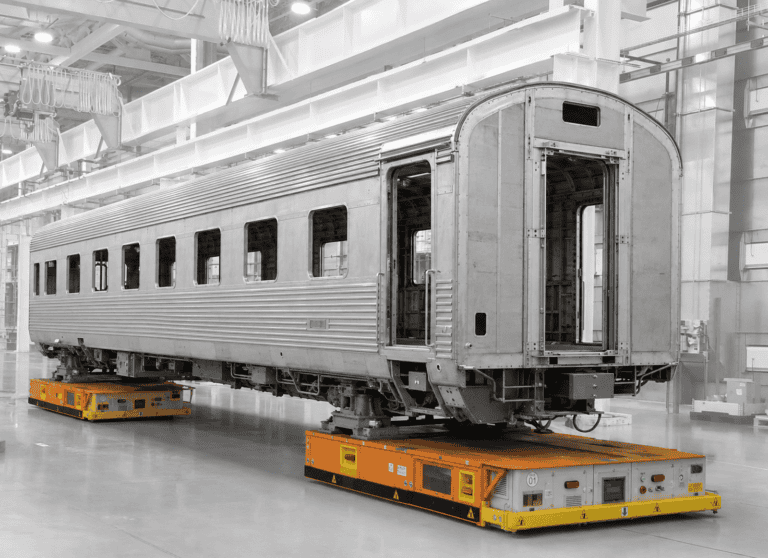
An AGV shares all the same safety and tooling options like visible and audible alarms, sensors, scissor lifts etc. that an MGV can be outfitted with, but can also be automated to follow a set path programmed into the AGVs smart systems for repetitive duties within the Data center.

Automated Guided Vehicles (AGVs) and Autonomous Mobile Robots (AMRs)
AGVs and their more flexible counterparts, AMRs, are essential for transporting heavy and sensitive equipment across the data center floor. These robots can navigate complex layouts to move entire server racks or deliver components from storage to the point of installation. By automating this transport, data centers reduce the risk of injury and equipment damage associated with manual pushing and pulling of heavy carts. This level of automation is central to creating efficient and safe internal logistics.
Robotic Arms and Collaborative Robots (Cobots)
Another excellent use of an AGV is for performing tasks requiring high precision, robotic arms and cobots which are fixed to an AGV platform are increasingly being deployed. These robots can perform delicate operations like swapping out individual hard drives, managing complex cabling, or assisting technicians with component installation. They offer a level of steady, repeatable precision that is difficult for humans to achieve consistently, further reducing the risk of error in critical operations.
The Power of Automation Technology and Industrial Automation
Automation is the engine driving efficiency. Automated material handling systems link different pieces of equipment into a cohesive whole. A Warehouse Management System can direct an AS/RS to retrieve a server, which is then picked up by an AGV and transported to a specific row, where a technician uses a specialized lift for final installation. This seamless integration of industrial automation minimizes manual touchpoints, accelerates workflows, and reduces errors.
Enhanced Operational Efficiency and Maximized Uptime
Efficient material handling directly translates to maximized uptime. Faster deployment of new servers, quicker replacement of failed components, and reduced time spent searching for inventory all contribute to a more agile and resilient operation. Automation ensures that the right part gets to the right place at the right time, minimizing the Mean Time To Repair (MTTR) and keeping services online.
Sustainability and Green Material Handling in Data Centers
Sustainability is a growing priority in data center operations. The sustainable data center market is forecast to explode, growing from $99.6 billion in 2025 to $441.7 billion by 2034. Strategic material handling contributes to this goal. Electric-powered robots and vehicles produce zero on-site emissions. Optimized transport routes reduce energy consumption, and efficient inventory management prevents the waste associated with lost or damaged equipment. A well-organized material handling process is essential for managing the responsible decommissioning and recycling of outdated IT assets, closing the loop on a sustainable equipment lifecycle.
Conclusion
Strategic material handling is no longer a back-of-house function but a core pillar of successful data center operations. In an industry where uptime is paramount, efficiency is mandatory, and security is non-negotiable, the precise and automated management of physical assets is indispensable. By moving beyond traditional warehouse logic and embracing a specialized ecosystem of equipment—from Automated Storage and Retrieval Systems and robots to intelligent software platforms—operators can mitigate critical risks, reduce operational costs, and build more resilient, scalable, and sustainable facilities. The future of data center optimization lies in the seamless integration of digital intelligence with flawless physical execution, and strategic material handling is the critical bridge between the two. For any operator looking to gain a competitive edge, the immediate next step is to conduct a thorough audit of their current material flow and identify key areas where automation and specialized equipment can replace manual risk and inefficiency.