Digital Transformation in Material Handling
Modern material handling is defined by the speed, accuracy, and intelligence of data flowing through the warehouse. Digital transformation is the process of evolving from rigid, siloed operations into a connected ecosystem. For assembly and MRO leaders, the challenge is not deciding whether to automate, but how to sequence complex technological upgrades without disrupting the processes. A 12-month roadmap provides the necessary structure to navigate this shift, moving from legacy dependencies to predictive, autonomous operations.
The Paradigm Shift: Why a Phased Roadmap is Critical for Material Handling
Digital transformation in material handling is not an overnight installation; it is an organizational pivot. Without a phased approach, companies often fall into the trap of “technology-first” thinking, where hardware is purchased before processes are optimized. This strategy ensures that every investment, whether in autonomous mobile robots (AMRs) or data analytics, builds upon a stable foundation.
Moving from Reactive Maintenance to Predictive Optimization
Traditionally, operations managers operate in a reactive state, fixing equipment when it breaks. Digital transformation shifts this to a proactive stance. By leveraging IoT sensors and machine learning, firms can anticipate failure before it disrupts the MRO or assembly processes. This transition from “break-fix” to “predict-prevent” is the hallmark of operational excellence.
The “Crawl-Walk-Run” Approach to Digital Maturity
The Crawl-Walk-Run methodology ensures a stable, risk-mitigated transition from manual processes to fully autonomous facility operations.
Transformation is an iterative process. “Crawling” involves digitizing manual data capture. “Walking” integrates that data into cloud systems for visibility. “Running” introduces autonomy and artificial intelligence to drive real-time decision-making. This methodology mitigates risk and ensures that ROI is realized at every stage.
Overcoming the Friction of Legacy Systems and “Black Box” Technology
Many organizations struggle with “black box” legacy systems—proprietary software that resists integration. Modernizing requires an API-first mindset. Rather than ripping out everything at once, leaders must prioritize middleware that acts as a bridge between legacy databases and modern, agile cloud solutions.
Pre-Roadmap: The Readiness Audit (Month 0)
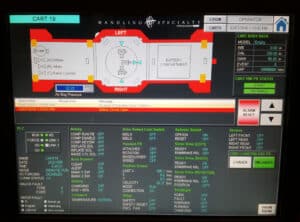
Before deploying a single sensor, you must understand your baseline. The audit phase is about transparency, not just technology.
Assessing Current Workflow Efficiency and Throughput Bottlenecks
You cannot improve what you do not measure. Identify where your operations stall. Are forklifts traveling empty miles? Are work cells inhibited by poor layout? Use data analytics to map the physical movement of goods against your Manufacturing Execution Systems (MES) to find the true bottlenecks.
Evaluating IT Infrastructure: From On-Premise Servers to Edge Readiness
Modern manufacturing facilities solutions rely on low-latency connectivity. Evaluate whether your facility can handle the shift from on-premise silos to cloud environments. This requires robust Wi-Fi 6 or private 5G networks to ensure that edge devices—like scanners and IoT-enabled mobile equipment—remain connected without lag.
Identifying the “Human Factor”: Developing a Change Management Strategy
Digital transformation is 20% technology and 80% cultural change. If your staff views AMRs or automated systems as a threat to their roles, adoption will fail. Invest in transparent communication, training programs, and collaborative designs that emphasize human-machine synergy rather than replacement.
Phase 1: Building the Digital Foundation (Months 1-3)
The goal of the first quarter is to establish the “single source of truth.”
Bridging the Data Gap: Integrating RFID and IoT Sensors on Existing MHE
Start by retrofitting existing Material Handling Equipment (MHE). Using RFID tags and IoT sensors on assets provides real-time location data. This visibility is the first step toward digitizing the physical environment, ensuring the system knows exactly where every pallet, container, and vehicle is located at all times.
Data Normalization: Connecting AGVs and Production Equipment to a Central Platform
Fragmented data is useless. By funneling information from automated guided vehicles, conveyors, and production machinery into a unified platform, you normalize the data. This allows for cross-departmental insights, ensuring that what happens on the factory floor is perfectly mirrored in the warehouse management system.
Real-Time Visibility: Establishing a Single Source of Truth for Inventory Management
With sensors and connectivity in place, move to real-time inventory tracking. A single source of truth eliminates the “lost inventory” problem and reduces cycle counting time. This foundation supports subsequent investments in advanced robotics and demand forecasting.
Phase 2: The Core Transition—Cloud WMS and Digital Platforms (Months 4-6)
Once data is flowing, you need a system capable of orchestrating it.
Migrating from Legacy ERP to Cloud-Based Warehouse Management Systems (WMS)
Moving to a cloud WMS provides the agility that legacy systems cannot match. Cloud environments enable real-time updates and seamless integration with third-party logistics apps. This creates a responsive architecture where updates are pushed globally, not managed server-by-server.
Integrating Manufacturing Execution Systems (MES) for End-to-End Visibility
Integrate your MES with your WMS to bridge the gap between production and distribution. This ensures that when a product leaves the manufacturing line, the warehouse is already prepared to receive it. This synchronization reduces dwell time and optimizes staging areas.
Establishing Cybersecurity Protocols and Cyber Defense Systems for Connected Assets
As your operations become more connected, the attack surface expands. Implement rigorous cybersecurity protocols, including multi-factor authentication and network segmentation. Protect your digital twins and operational data against unauthorized access to maintain the integrity of your supply chain.
Phase 3: Operationalizing Autonomy with AMRs, AGVs, and Robotics (Months 7-9)
With the digital infrastructure secured, introduce mobility and physical automation.
Deploying AGVs and Autonomous Mobile Robots (AMRs) for Internal Transportation
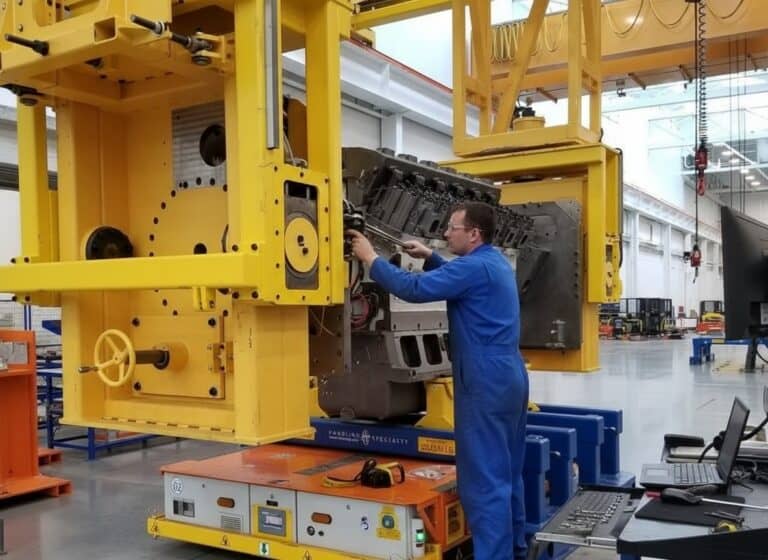
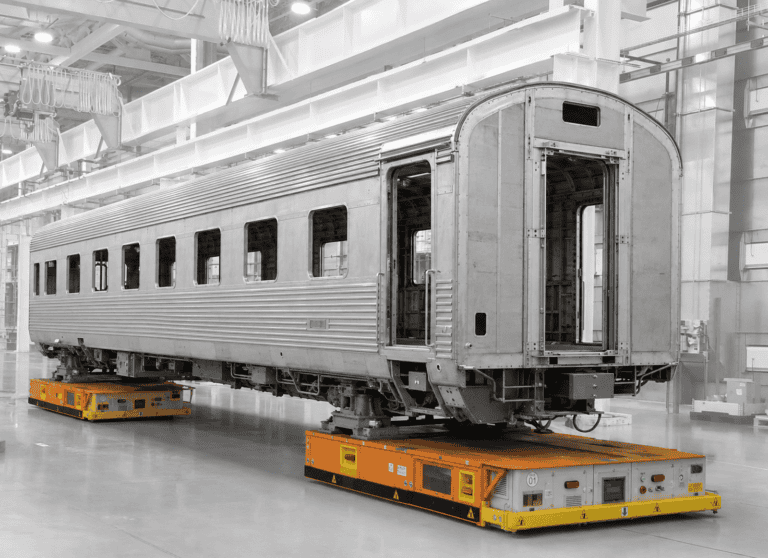
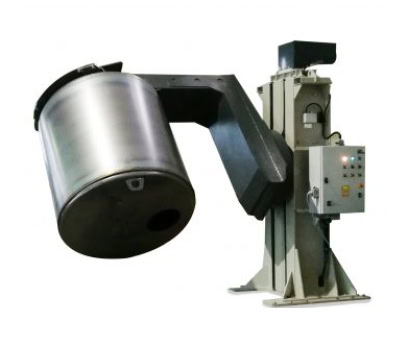
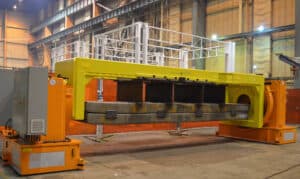
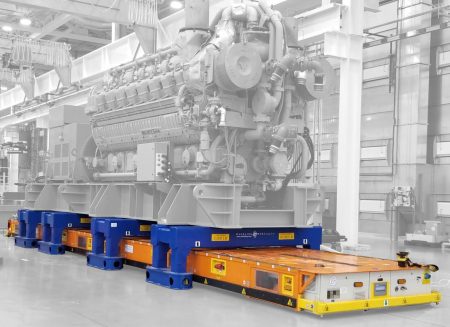
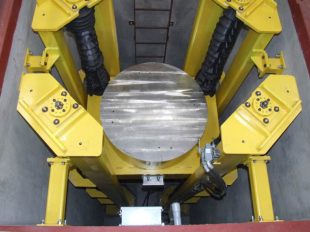
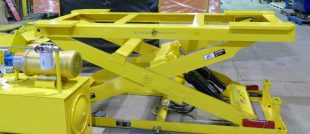
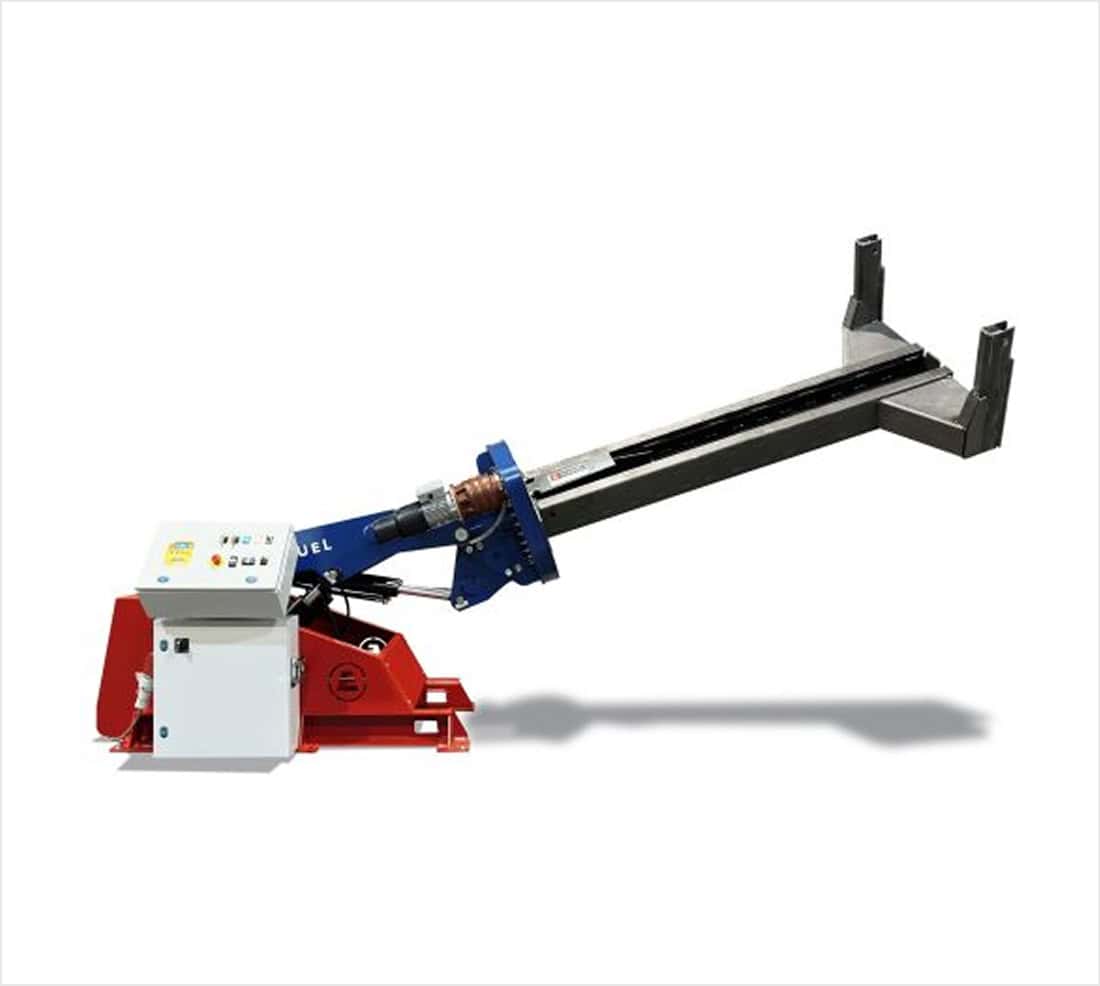
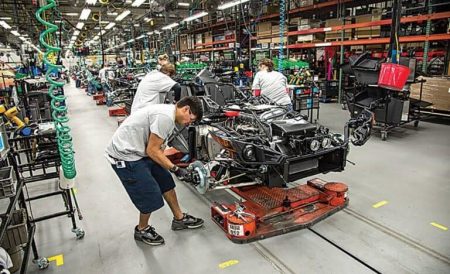
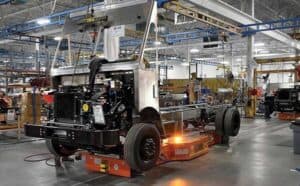
AGVs serve as the nervous system of modern material handling. Unlike fixed conveyors, AGVs are flexible. They can navigate around obstacles, reroute on the fly, and scale as volume increases. Deploying them for routine material transport offloads tedious, repetitive tasks from human operators. AGVs can also be fitted with custom tooling such as scissor lifts, rotators, turn tables, tilter platforms and other equipment to promote precise positioning at work cells.
Coordinating Robotic Arms and AGVs within the Workflow
Orchestration is key. Your software must manage the handover between robotic arms—which handle picking and palletizing—and AGVs, which transport the payload. This integration creates a seamless flow of goods from the start of the line to the loading dock.
Optimizing Warehouse Layouts for Human-Machine Collaboration
The most effective layouts support human-machine collaboration (cobots). Design zones where robots handle the “heavy lifting” and transport, while humans focus on complex quality control, exception handling, and value-added services.
Phase 4: Advanced Optimization and Predictive Analytics (Months 10-12)
In the final phase, you pivot from executing tasks to predicting business outcomes.
Utilizing Machine Learning and AI-Powered Analytics for Demand Forecasting
Apply artificial intelligence to your historic and real-time data. Machine learning models can identify seasonal trends and demand shifts, allowing you to pre-position inventory. This moves your logistics strategy from reactive to anticipatory.
Creating Digital Twins for Scenario Testing and Throughput Modeling
Digital twins provide a virtual replica of your facility. Before changing a layout or adding new equipment, simulate the impact in the digital twin. This mitigates the risk of downtime and ensures that physical modifications yield the expected ROI.
Implementing Predictive Maintenance to Minimize Downtime of Connected AGVs
Predictive analytics monitors the health of your connected automated guided vehicles. By analyzing vibration, temperature, and usage data, the system identifies when a component is nearing end-of-life. Scheduling maintenance during off-hours prevents the sudden equipment failures that traditionally cause costly facility delays.
Leveraging Mixed Reality and Unity Ecosystems for Operator Training
Modern training uses the same digital twins created for modeling. Mixed Reality (MR) headsets provide immersive simulations that allow operators to practice with new machinery in a risk-free environment. This significantly flattens the learning curve for new technologies.
The Sustainability Overlay: Measuring ESG Impact Through Digitalization
Digital transformation is a powerful tool for sustainability. It allows companies to track the environmental footprint of their logistics activities with unprecedented precision.
Real-Time Tracking of Energy Consumption and Carbon Footprints
Integrate power-monitoring sensors into your MHE fleet. By tracking energy usage at the machine level, you can identify which assets are inefficient and optimize their duty cycles. This data is essential for ESG reporting and long-term carbon reduction strategies.
Battery Health Management: Optimizing Lithium-ion Charge Cycles
Lithium-ion batteries have specific life cycles. By using analytics to optimize charging intervals and monitor state-of-health, you extend the life of your batteries and reduce waste. Proper energy management ensures your fleet remains operational for longer periods while minimizing your facility’s peak energy load. Adding one or two extra AGVs to your fleet allows for uninterrupted processes while other AGVs are charging.
Conclusion
Digital transformation is not a static destination; it is an infinite journey toward operational excellence. By following a 12-month roadmap, you replace uncertainty with process. You start by building a foundation of data through IoT and RFID, move to the core orchestration of a cloud-based WMS, scale physical capabilities through AGVs and multi-carrier systems, and ultimately achieve insight through predictive analytics and digital twins.
Success requires balancing technology with a human-centric change management strategy. Remember that automation is designed to augment your workforce, not replace the intuition and problem-solving abilities that human operators bring to the floor. As you complete this 12-month cycle, do not view it as the end of the project, but as the beginning of a cycle of continuous improvement. Utilize the “Kaizen” philosophy: assess your new baseline, identify the next bottleneck, and iterate again. In an era of increasing supply chain volatility, the organizations that thrive will be those that embrace agility, maintain a single source of truth, and continuously optimize their digital ecosystem. Your roadmap is now in place—the next step is to begin the implementation, one milestone at a time.