The Hidden Cost of Unidentified Constraints in Heavy Industry
Unplanned equipment downtime costs Fortune Global 500 manufacturers an estimated $1.4 trillion annually, equivalent to 11% of total revenues. In heavy-duty environments, that loss rarely traces back to the press, the furnace, or the CNC cell that dominates the capital budget. It accumulates at the handoffs like the dock door, the sorter, the crane bay, where flow stops and nobody owns the stoppage.
Our arguments are straightforward: the most expensive asset on your floor is rarely the thing limiting your output. Systematic bottleneck analysis in lean manufacturing routinely finds throughput locked inside existing equipment, and applying the Five Focusing Steps typically reveals 30% hidden capacity within a manufacturing facility without requiring additional capital investment. Elsewhere, TOC implementation has been shown to result in a reduction of up to 20% in task duration, and to increase item availability to nearly 100%.
Bottleneck vs. Constraint
A bottleneck is a physical capacity limit (a station that cannot process work as fast as it arrives). A constraint is whatever governs the system’s throughput, which may be physical, but is just as often a policy, a scheduling rule, or a measurement habit.
High-mix heavy industry is especially prone to floating bottlenecks: the limiting station shifts with product mix, so last quarter’s fix solves nothing this quarter.
Applying Goldratt’s Five Focusing Steps to Handling Systems
Goldratt’s method for theory of constraints manufacturing is sequential. Skipping ahead is the most common failure in heavy industry, because the temptation is always to buy capacity.
- Identify the constraint. Find the single point that governs system throughput, but not the busiest station, rather the one everything else waits on. In handling-heavy plants, this is frequently an interface rather than a machine.
- Exploit the constraint. Get everything available out of it before spending a dollar. That means staged trailers at the dock before the door opens, no shift-change idle time on the crane, and no constraint-hour spent on scrap.
- Subordinate everything else. Non-constraint stations must run at the constraint’s pace, not their own. A sorter running at full speed upstream of a saturated pack line manufactures nothing but WIP.
- Elevate the constraint. Only now do you add shifts, tooling, or equipment like AGVs, and only at the point you’ve proven limits you.
- Repeat, and refuse inertia. When the constraint moves, the old rules built around it become the new constraint.
Pro Tip: Applying the Five Focusing Steps typically reveals 30% hidden capacity within a manufacturing facility without requiring additional capital investment. Exhaust steps one through three before approving a purchase order.
Five Methods to Pinpoint Your Primary Production Stall
Knowing how to identify bottlenecks in manufacturing requires floor-level observation, not just dashboards. Five diagnostics, used together, will isolate the constraint in most heavy-duty facilities:
- Wandering WIP audits. Walk the floor at the same hour on consecutive days and mark where work-in-progress piles accumulate. Inventory gathers immediately upstream of the constraint — the pile indicates the problem.
- Throughput mapping. Record actual output per station against its theoretical rate. The station with the widest gap between design capacity and sustained delivery is a candidate.
- Spindle utilization data. In machine shops, pull machine-level uptime and separate cutting time from setup, waiting, and idle. A spindle that’s “busy” but not cutting isn’t producing.
- Wait-time analysis. Track how long material sits at dock doors, staging lanes, and pack stations. Queue time, not process time, is where most throughput disappears.
- The shout test. Ask supervisors which station generates the most expediting, overtime, and escalation. Organizational stress clusters around the constraint with uncomfortable accuracy.
TOC implementation has been shown to result in a reduction of up to 20% in task duration — a figure that depends entirely on aiming the effort at the right station first.
Common Culprits: Why Handling Systems Often Fail First
Intake
Dock doors are an often under-measured asset in heavy industry. When inbound receiving can’t stage material at the rate production consumes it, the line starves regardless of how much machine capacity sits idle downstream.

Internal Flow
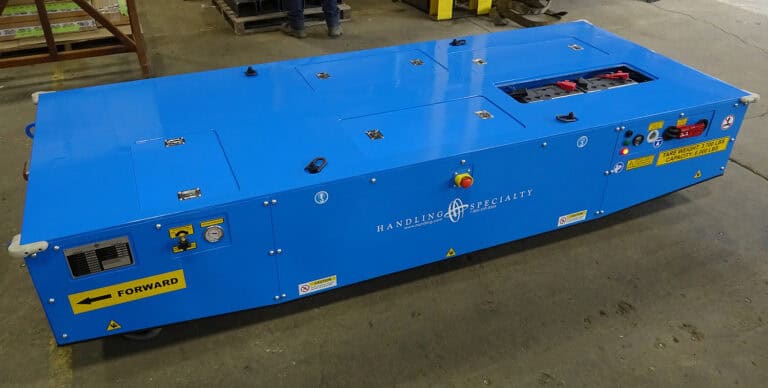
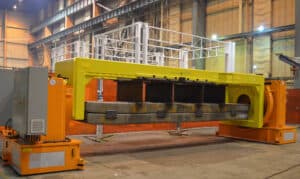
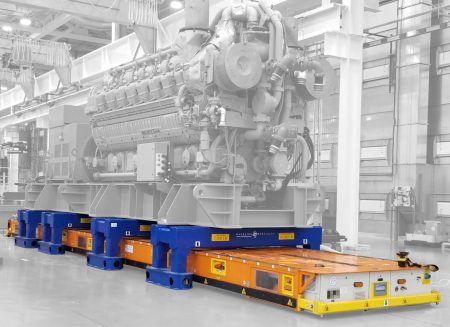
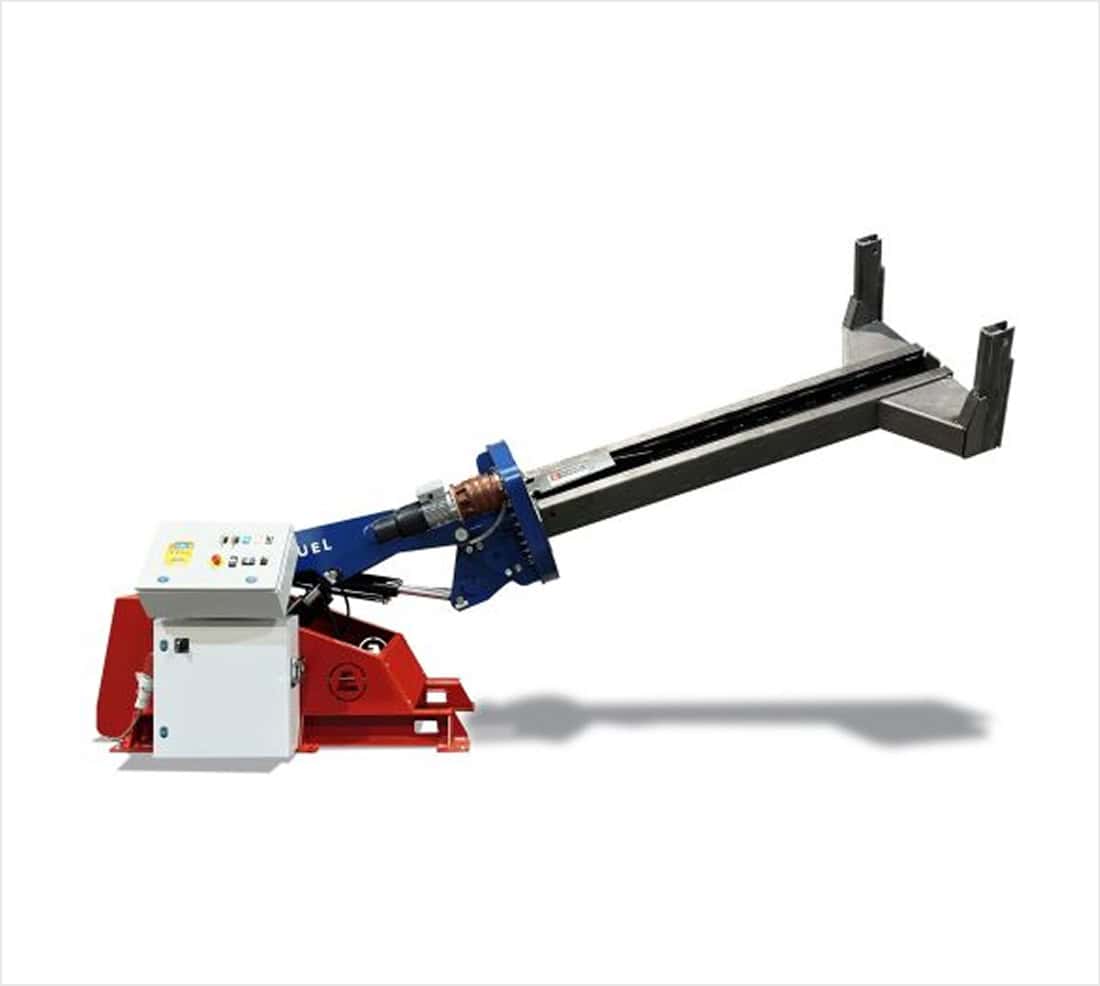
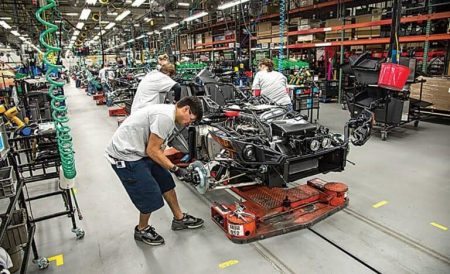
Sorters, conveyance, such as Manually Guided Vehicles, and overhead cranes are the lifelines of a plant, and they fail long before the core does. A railcar mover or a single large-capacity crane often dictates the rhythm of an entire facility and every production cell downstream inherits that cycle time, whether the schedule acknowledges it or not.
Final Output
Pack stations are where high-volume automated production collides with manual labor limits. Output that arrives in automated batches but leaves one hand-sealed unit at a time creates a terminal queue that no upstream improvement can clear.
TOC implementation increased item availability to nearly 100% — evidence that constraint discipline at these interfaces changes what the rest of the system can reliably deliver.
The Drum-Buffer-Rope Model for Industrial Scheduling
Picture a parade column. The slowest marcher determines how fast the whole parade actually moves. If the lead ranks march faster, gaps open; the parade doesn’t finish sooner, it just spreads out. Drum-Buffer-Rope formalizes that observation into a scheduling method.
The Drum — the constraint itself, whose cycle time sets the beat for the entire plant. In heavy-duty operations, the drum is frequently the crane, the railcar mover, or the dock, not the production cell.
The Buffer — a deliberate quantity of time or inventory held immediately ahead of the drum, protecting it from upstream variation. The buffer exists so the constraint never waits.
The Rope — the signal that releases new work into the system only at the rate the drum can absorb it. The rope prevents the floor from filling with WIP that cannot be processed.
For large-capacity equipment, DBR replaces the habit of scheduling every asset to local efficiency targets. Work is released against the drum’s calendar, buffers are sized to the plant’s real variability, and the floating bottleneck becomes visible the moment the buffer in front of the drum starts behaving differently.
What You Need to Know: Key Takeaways for Operations Leaders
Bottleneck analysis operations management comes down to four conclusions worth carrying back to the floor:
- Your constraint is probably an interface, not an asset. Dock doors, sorters, conveyance, and pack stations interrupt flow more often than the primary machines that dominate the capital budget.
- Exploit before you elevate. Significant additional capacity is usually available inside the equipment you already own, recovered through staging discipline, setup reduction, and scheduling changes rather than procurement.
- Schedule to the drum. Drum-Buffer-Rope keeps release rates tied to the constraint, prevents WIP from masking the real limit, and makes floating bottlenecks visible as they move with product mix.
- Treat inertia as a constraint. Once a bottleneck is broken, the policies and metrics built around it will limit the system next. Re-run the analysis rather than assuming the answer holds.
Throughput is a property of the system, not of its individual machines — and it improves only when the whole plant is synchronized to its single tightest point.
Building for Long-Term Throughput: The Next Step
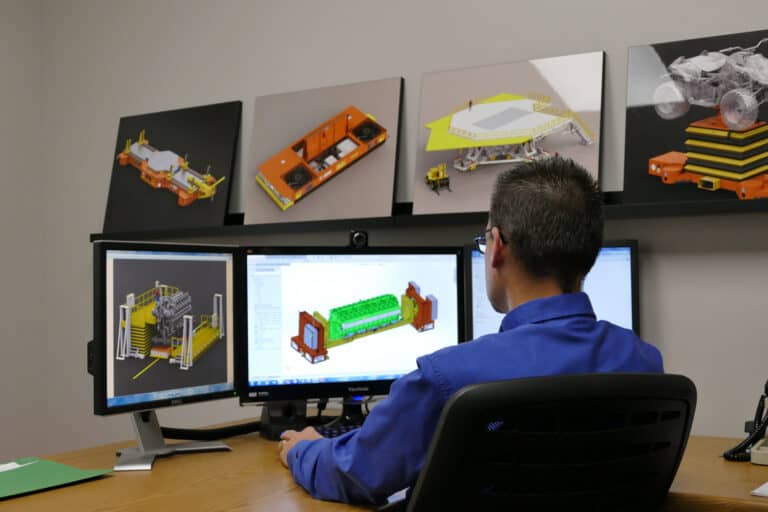
Identifying the constraint is analysis. Removing it is engineering. Once the drum is known and exploited, the remaining gains come from redesigning the physical interface itself and reconfiguring staging geometry, re-rating a lift or transfer system, or replacing a handling method that was adequate for a product mix the plant no longer runs. This is a perfect opportunity to automate the majority of your material handling systems to ensure every stage of you manufacturing experiences efficient timing and no bottlenecks.
That work resists off-the-shelf answers. Heavy-duty facilities carry load profiles, clearances, duty cycles, and environmental conditions that standard catalog equipment was never specified against. A handling solution engineered to the actual constraint rather than to a general capacity class is what converts a diagnosed bottleneck into permanent throughput.
Equally important is what happens after installation. If the drum sets the beat for the entire plant, its availability is the plant’s availability. Preventive service, spare-part access, and responsive support aren’t administrative details; they’re the difference between managing a constraint and being managed by it.
If your throughput has plateaued despite capable equipment, bring the constraint to an engineering conversation. Describe the interface, the load, and the cycle you need and let the solution be designed around the limit you’ve actually identified.