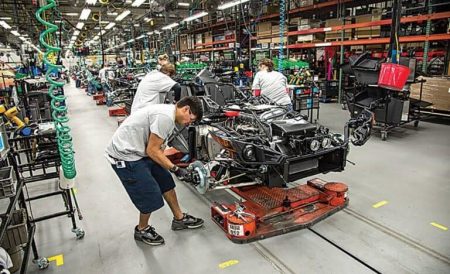
The Strategic Impact of Material Handling Selection
Assembly, MRO, and warehouse material handling is not a background function, but, the single largest lever you can pull on operating costs, and the wrong choice can quietly erode margins for years.
Material handling accounts for 15% to 70% of total manufacturing and distribution costs — a range so wide it reflects just how dramatically the right or wrong system changes the financial equation. Most operations sit closer to the upper end of that range than they’d like to admit. And yet, material handling decisions are frequently made reactively, often after a system fails to scale or a bottleneck becomes impossible to ignore.
Off-the-shelf solutions present a particularly common trap. Standard conveyor layouts and pre-configured automated systems are designed for average conditions. But specialized manufacturing environments — those with heavy-duty loads, non-standard product dimensions, or complex routing requirements — rarely conform to average. What looks like a cost-efficient purchase at the outset can become an expensive workaround within 18 months.
The shift toward automation compounds this urgency. As labour costs rise and throughput demands increase, manual handling reaches a natural ceiling. Scaling beyond that ceiling without a purpose-built material handling strategy isn’t just inefficient — it’s operationally unsustainable. Choosing the right system from the start is a strategic decision, not a procurement checkbox.
Understanding what that decision actually involves requires a structured framework — one that accounts for your facility, your volume, and your long-term cost of ownership.
A Decision Framework for Modern Automation
Choosing the right automation systems isn’t about chasing the latest technology — it’s about matching system capabilities to your facility’s specific operational realities.
And that distinction matters more than most operators realize. 80% of material handling modernization pilots fail to scale, according to the Manufacturing Leadership Council — often because the selection process prioritized vendor demos over facility-specific variables. A structured framework changes that outcome.
- Facility Size and Layout — Square footage and ceiling height aren’t just architectural specs; they’re decision filters. Tighter facilities with fixed flow paths favor conveyors, while facilities with open floor plans and evolving layouts create room for AGVs to navigate dynamically. Ceiling height directly affects vertical lift options and mezzanine integration.
- Throughput Thresholds — Every operation has a tipping point where manual labour stops scaling and starts creating bottlenecks. Identifying that threshold — units per hour, picks per shift, product moves per day — tells you when automation stops being an upgrade and becomes a necessity.
- Budget vs. Total Cost of Ownership (TCO) — Upfront capital cost is rarely the full picture. Maintenance schedules, unplanned downtime, and energy consumption can quietly erode ROI. A system with a lower sticker price but higher failure rate often costs more over a five-year horizon than a premium engineered solution.
- Product Type and Load Requirements — Heavy-duty, oversized, or non-standard loads frequently fall outside what off-the-shelf systems can handle safely. Custom engineered solutions address these edge cases by designing around your actual product profile, not a generic one.
Run each variable through this lens before committing to any system and you’ll have a much clearer picture of which technology category fits your operation. That brings us to the comparison most operators wrestle with longest: conveyors vs. AGVs vs. manual systems, and where each one actually wins.
Conveyors vs. AGVs vs. Manual: The Trade-off Matrix
When it comes to material handling system selection criteria, no single transport mode wins across every scenario — the right choice depends entirely on your volume profile, layout stability, and labor cost trajectory.
| System Type | Best Use Case | Primary Limitation |
| Conveyors | High-volume, fixed point-to-point flows | Minimal flexibility for layout changes |
| AGVs | Evolving facility layouts, scalable operations | Higher upfront capital investment |
| Manual Systems | Low-volume or highly variable workflows | Long-term labor cost risk, lower throughput |
| Hybrid (Lifts + Automated Transfer) | Multi-level or mixed-load environments | Integration complexity |
Conveyors deliver throughput where the flow path doesn’t change. Conveyors provide the highest throughput for fixed point-to-point flows but offer the least flexibility for layout changes. If your SKU mix is stable and volume is predictable, that’s a trade-off worth making.
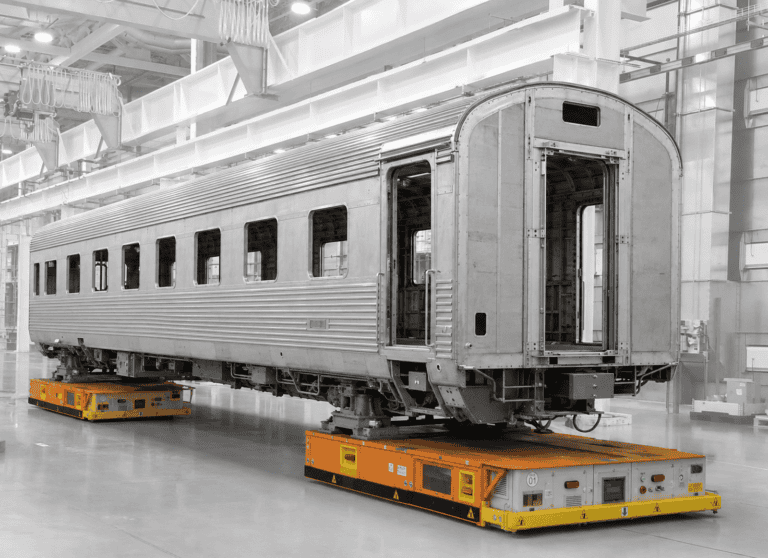
AGVs flip that equation. They’re built for facilities where the layout shifts with business growth or seasonal demand. The flexibility comes at a cost, but it’s often offset by reduced long-term labour dependency and scalability that conveyors simply can’t match.
Manual systems carry a deceptive appeal — low entry costs feel like a win upfront. But what typically happens is that labor expenses compound over time while throughput ceilings create bottlenecks that technology can’t easily patch later.
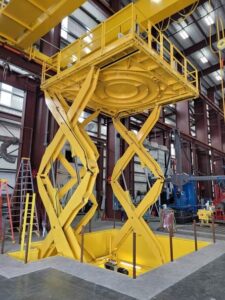
The most resilient operations don’t pick one mode and commit fully. A hybrid approach of integrating custom lifts and transfers alongside automated transport allows you apply each system where it genuinely excels. That nuanced thinking sets up a deeper question: which specific workflows in your facility actually need which system type?
Matching System Types to Your Workflow
The right material handling systems don’t just move product — they’re engineered around the specific demands of each operational stage, from receiving dock to finished goods.
Receiving and Sortation workflows are where throughput pressure is highest. High-speed conveyors paired with automated induction stations can process hundreds of cartons per minute, reducing manual touch points and the labour costs that come with them. In practice, facilities that rely on manual sortation at this stage often become the bottleneck that ripples through every downstream process.
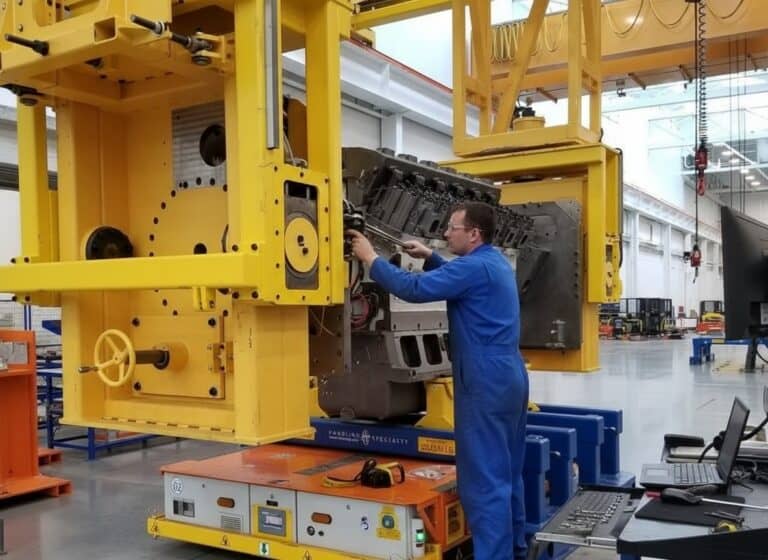
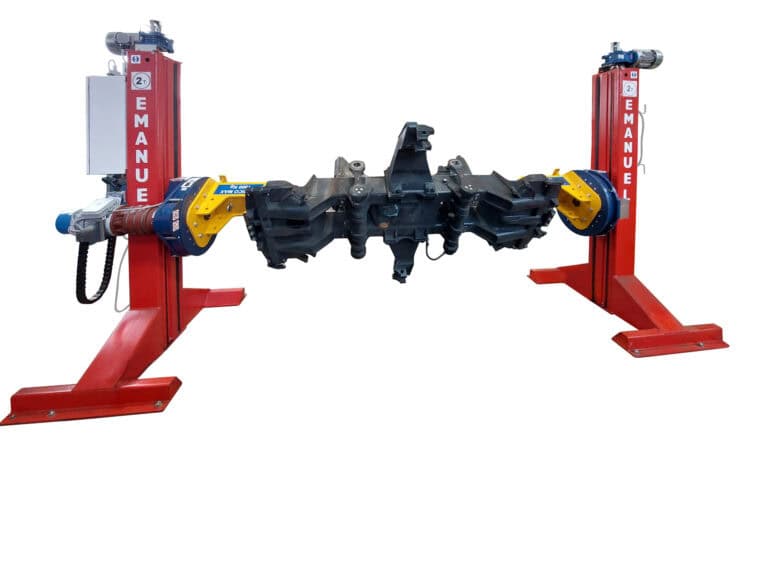
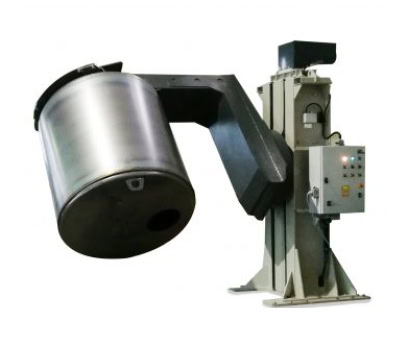
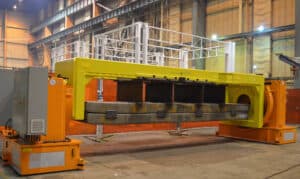
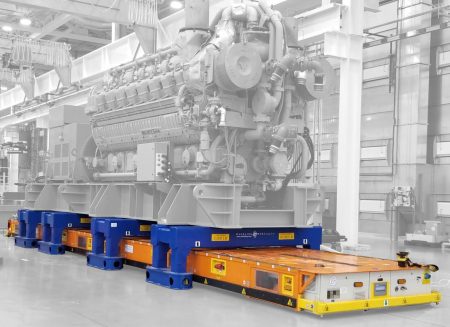
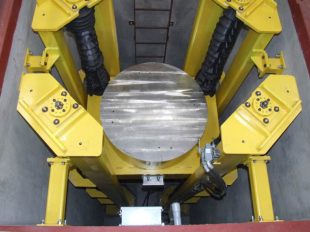
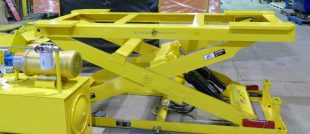
Heavy-duty manufacturing environments introduce a different set of demands. Custom personnel lifts and heavy-duty AGVs become essential when your floor involves large assemblies, ergonomic risk, or equipment that standard off-the-shelf solutions simply weren’t designed to carry. The calculus here shifts from throughput to precision and safety which are two factors that directly affect both liability exposure and production yield.
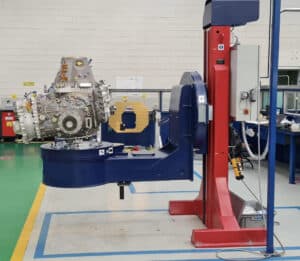
Aerospace and defense operations represent perhaps the most demanding application. Custom material handling systems are often required in these sectors to handle high-value, non-standard loads that standard equipment can’t safely or reliably transport. Oversized components, strict handling protocols, and zero tolerance for damage make specialized engineering a baseline requirement, not an upgrade.
Work-in-process (WIP) movement ties all these stages together. Balancing speed with precision handling is the central challenge — move too fast and you introduce damage risk; move too slow and you starve downstream stations. Getting this balance right depends on understanding your cycle times, load characteristics, and where human intervention is still genuinely necessary. Once you’ve mapped your workflow to the right system type, the next step is knowing what to ask the suppliers who build them.
Critical Questions to Ask Your System Supplier
Applying an automation decision framework before you sign a contract separates successful implementations from costly retrofits that eat into your operating budget.
Supplier conversations tend to focus on price and delivery. But the questions you ask during procurement reveal far more about long-term fit than any sales presentation will. Here are the critical ones worth pressing on:
- Can this system integrate with my existing WMS/ERP? Compatibility issues discovered post-installation are expensive to resolve. Get a clear answer on supported protocols, middleware requirements, and who owns the integration work.
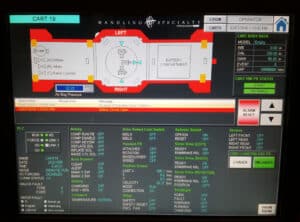
- What is the expected maintenance schedule for heavy-duty cycles? High-throughput environments wear equipment faster. Ask for documented service intervals specific to your projected load, not just standard specs. Every factory acceptance test form the OEM will perform and chart these stats.
- How does the system handle non-standard or oversized loads? If your product mix includes irregular shapes or heavy items, the system needs a defined answer and not a workaround. Again, FATs and APIs will give you what you need from the OEM.
- What is the lead time for custom engineered components vs. off-the-shelf parts? A breakdown during peak season can halt production entirely. Understanding parts availability before you commit matters.
And critically: ask about project ownership end-to-end. Turn-key capabilities that provide a single point of contact from design through installation eliminate the coordination gaps where problems tend to hide. Custom material handling equipment providers like Handling Specialty have Parts & Services departments available to serve your OEM equipment.
The answers to these questions will shape the selection criteria you bring into the next phase — defining what a smart, sustainable system choice actually looks like for your operation.
Key Takeaways for System Selection
Your material handling choice isn’t a procurement decision — it’s a structural commitment that shapes your operating costs, throughput capacity, and competitive position for years ahead.
The sections above have walked through system types, workflow alignment, and the right questions to ask your supplier. Here’s how those insights compress into four decisions that matter most when you’re ready to move forward.
- Prioritize flexibility if change is coming. If your product mix, SKU count, or facility layout is likely to shift within the next three years, design for adaptability now. Automated Guided Vehicles and bespoke systems cost more upfront but avoid the expensive retrofits that rigid conveyor installations can force on you later.
- Use conveyors where volume and path are fixed. Modern material handling requires a balance of AGV flexibility and conveyor throughput — and conveyors remain the right call when you’re moving high-density product along a defined route. Throughput efficiency gains are hard to replicate with any other technology at that scale.
- Invest in engineered solutions for heavy-duty environments. Standard off-the-shelf equipment carries real risk when loads are heavy, tolerances are tight, or downtime carries significant cost. Custom-engineered systems are built around your specific safety and reliability requirements — not adapted from someone else’s.
- Evaluate total cost of ownership, not purchase price. With movement accounting for up to 70% of manufacturing costs, the cheapest system at acquisition rarely stays the cheapest in operation. Factor in maintenance, energy draw, labour dependency, and capacity ceiling before you commit.
Getting these four decisions right lays the groundwork for what a properly engineered workflow can actually deliver, and that’s where the real performance gains begin.
Optimizing Your Industrial Workflow
The difference between buying a machine and investing in an engineered solution is the difference between solving a symptom and restructuring the system around it.
In practice, facilities that treat material handling as a procurement exercise tend to optimize for unit cost rather than operational fit. What looks like a favorable price today becomes an expensive constraint when throughput demands shift or load profiles change. An engineered solution, by contrast, is designed around your site’s specific geometry, movement cycles, and long-term capacity requirements — so the system scales with the operation rather than against it.
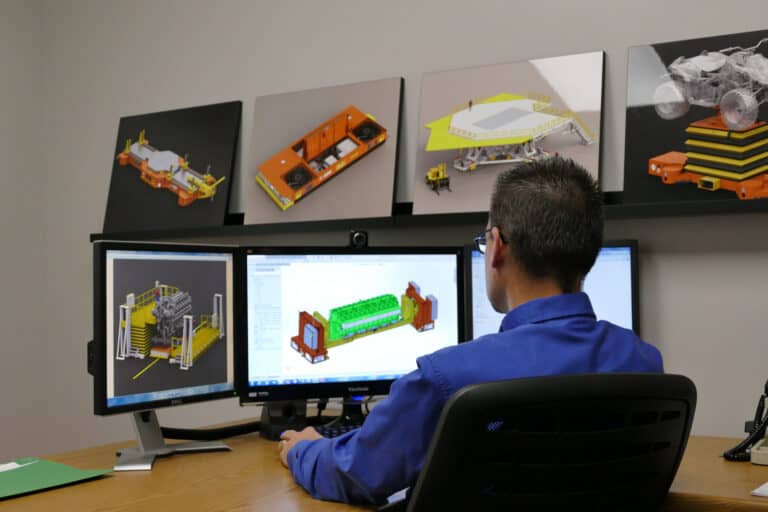
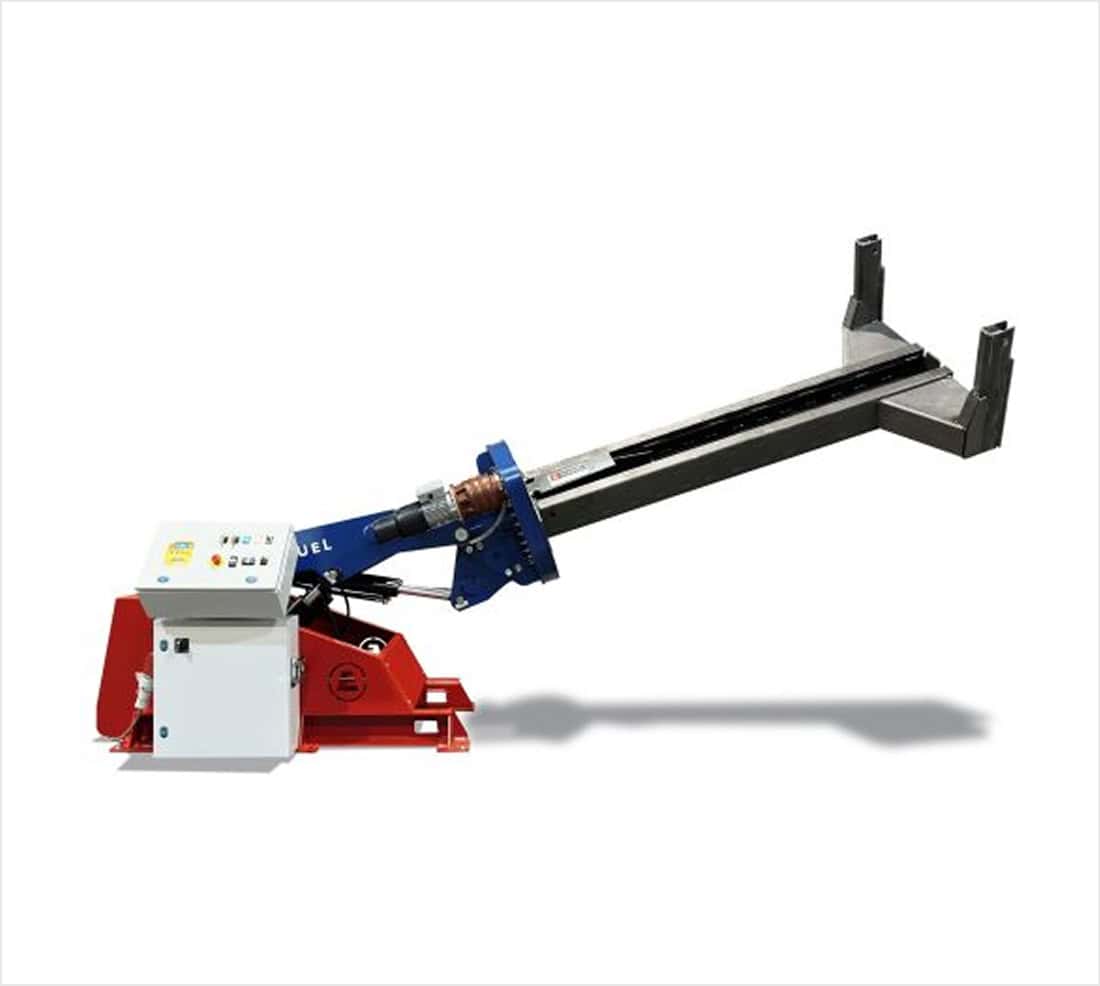
Handling Specialty specializes in exactly this kind of heavy-duty, site-specific engineering. From material handling systems to custom lifting and transport solutions, the focus is on industrial movement challenges that standard catalog equipment simply can’t address. And when complexity is the baseline and not the exception, the value of purpose-built engineering compounds at every stage of the facility lifecycle.
Moving from the theoretical frameworks covered throughout this article to a real operational decision requires one practical next step: a site-specific consultation. Bringing in an expert to audit your current throughput bottlenecks, assess your existing movement infrastructure, and map your load requirements against proven system configurations is how abstract principles become measurable performance gains.
If your current material handling setup is limiting throughput, driving maintenance costs, or constraining growth, request a free system consultation to identify where engineered solutions can deliver the most immediate impact.