The Shift from Manual to Automated Material Handling in 2026
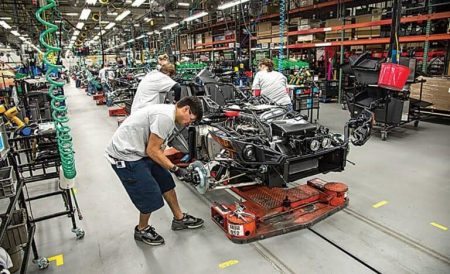
Material handling stopped being a question of moving product from point A to point B some time ago. In high-capacity manufacturing and distribution environments, it’s now a question of flow. How products, data, and labour move through a facility in a coordinated sequence, and where that sequence breaks under volume pressure. Manual processes don’t fail dramatically. They degrade: shift coverage gaps, variable pick rates, damage during transfer, and a throughput ceiling that no amount of hiring reliably lifts.
North American robot orders increased by 6.6% in 2025, reaching a total value of $2.25 billion, according to the Association for Advancing Automation. That’s not enthusiasm for technology. That’s capital moving toward a known problem.
The operating math has shifted alongside it. Automation implementation can produce a projected labour cost reduction of 47%, and for current AGV projects, the investment payback period is typically achieved in 5 years. Against those figures sits the Cost of Inaction — the throughput, margin, and market position surrendered while competitors build integrated capacity. COI is rarely itemized on a budget request, but it compounds every quarter a facility defers the decision.
Core Technologies: AMRs, AGVs, and the Rise of Cobots
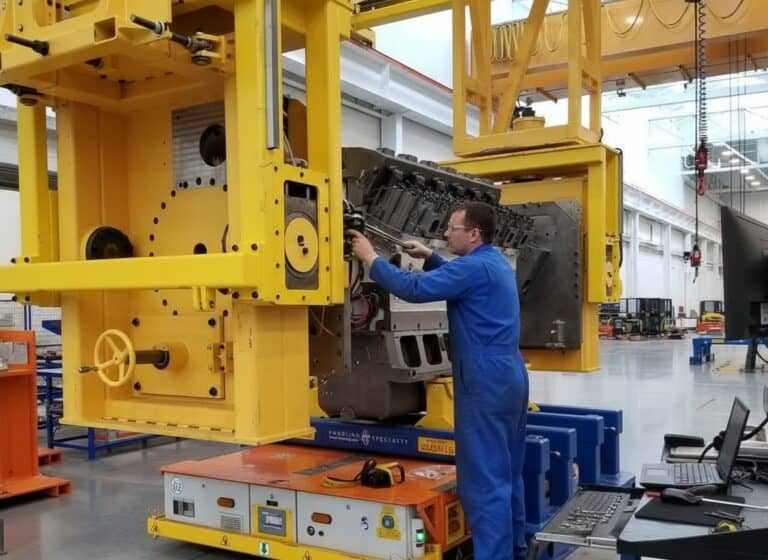
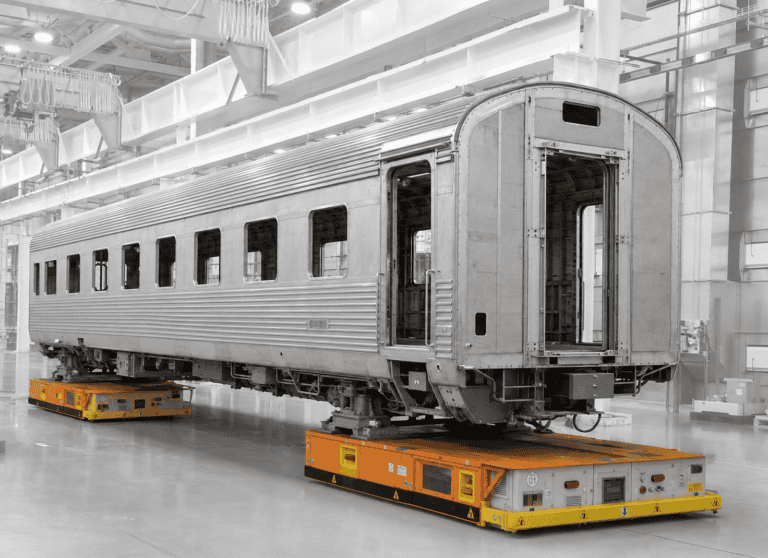
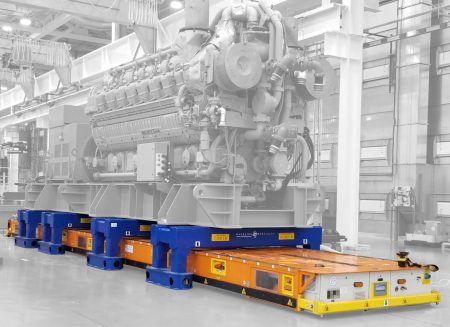
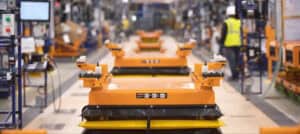
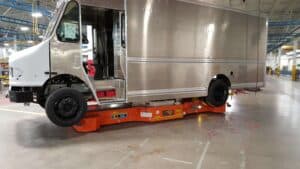
Automated Guided Vehicles follow fixed, predetermined paths using magnetic tape, cameras, or laser reflectors. That constraint is a feature in heavy industry. When an AGV is moving multi-ton coils, pallets of raw stock, or die carts between fixed stations, path predictability is a safety and reliability asset. AGVs suit repetitive, high-mass transport on stable routes.
Autonomous Mobile Robots navigate dynamically. Onboard sensors and mapping let an AMR reroute around obstructions, reassign tasks mid-route, and operate in mixed traffic with forklifts and personnel. They’re suited to facilities where layouts change seasonally or where transport demand is variable rather than fixed. Treating the two as interchangeable is a common and expensive specification error.
Automated Storage and Retrieval Systems address density rather than transport. AS/RS reclaims vertical cube, compresses footprint, and enforces inventory discipline, which is particularly valuable where bulk material handling equipment and heavy stock compete for constrained floor space. Collabourative robots, meanwhile, work alongside operators on sortation, palletizing, and transfer tasks that are ergonomically punishing but still require human judgment.
None of these deliver their full value in isolation. The return comes from material handling systems integration — vehicles, storage, and conveyance operating under one control layer.
The ROI Framework: Labour Savings and Accuracy Gains
The financial case rests on two categories: direct labour displacement and the error costs that labour-dependent processes generate. Both belong in the same model, because approving capital on labour savings alone understates the return.
- Labour cost offset. Automation implementation can lead to a projected labour cost reduction of 47%, which reframes recruiting and wage inflation from a recurring operating exposure into a fixed, depreciable asset.
- Shift elasticity. Automated transport and storage run across shifts without premium pay, absenteeism, or retraining cycles, converting peak-season overtime into baseline capacity.
- Accuracy and damage reduction. Fewer manual touches means fewer mis-picks, fewer damaged units, and fewer downstream reconciliation hours. These costs rarely appear on a single line item, which is precisely why they’re underweighted in approval packages.
- Safety and insurance exposure. Removing operators from repetitive heavy-lift and high-traffic transfer tasks reduces incident frequency and its associated claim and downtime costs.
For AGV implementation, the investment payback period is typically achieved in five years for current projects — a horizon that aligns with infrastructure depreciation schedules rather than quarterly expectations, and should be modeled accordingly.
Hard vs. Soft Automation: Choosing Your Entry Point
Most facilities can’t fund everything at once, so the entry point matters as much as the end state.
Hard automation
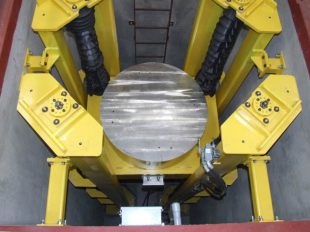
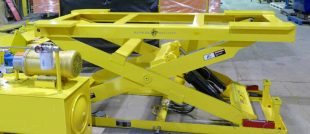
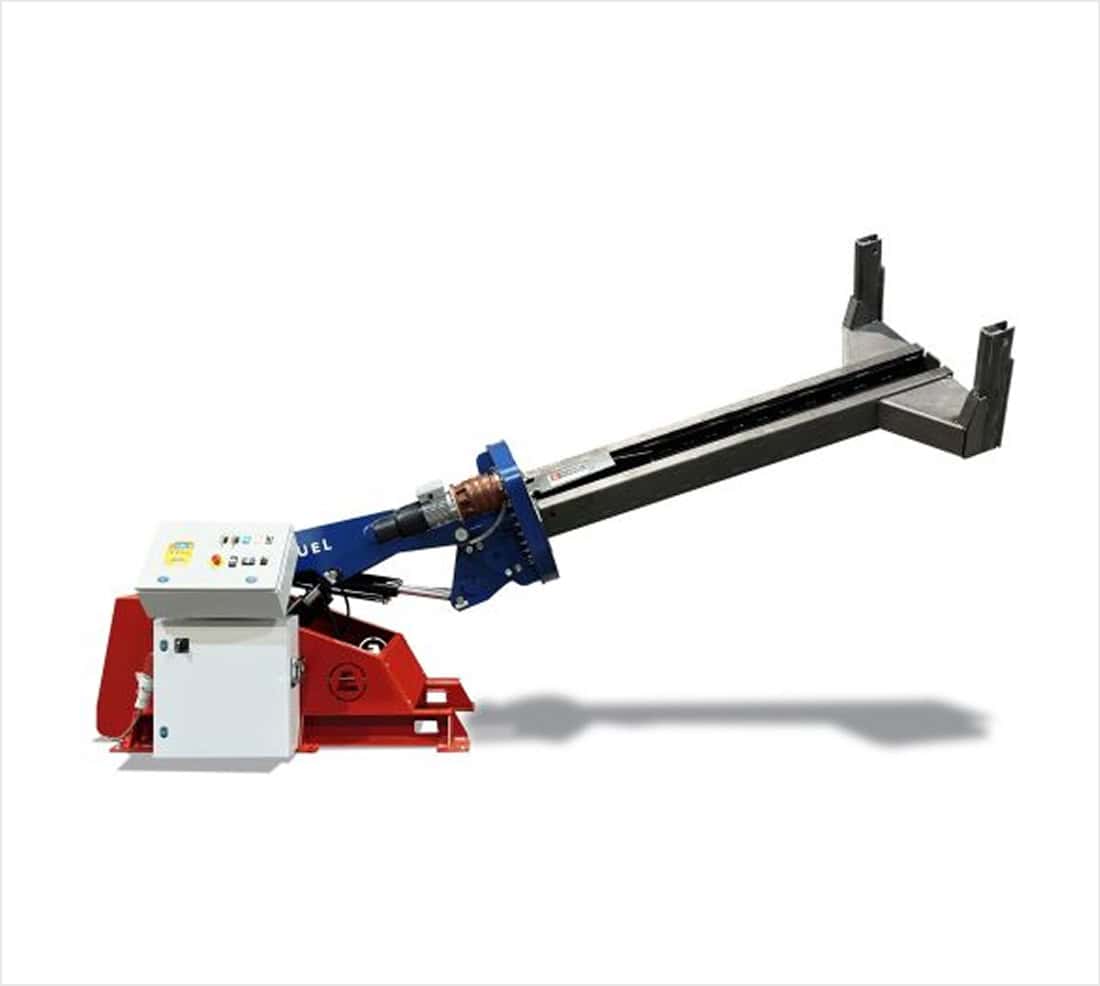
Hard automation is physical infrastructure: AS/RS structures, heavy-duty sortation, palletizers, and the conveyor belt for material handling that forms the spine of continuous flow. It’s high-CAPEX, long-lived, and structurally disruptive to install. It’s also the only route to genuine throughput expansion — software cannot create conveyance capacity that doesn’t physically exist. Hard automation locks in a facility’s ceiling for a decade or more, which makes specification errors costly and reversibility limited.
Soft automation
Soft automation is the control and decision layer: warehouse execution systems, AI-driven slotting, dynamic task allocation, and labour orchestration. It extracts more from assets already on the floor. Because deployment doesn’t require structural work, well-scoped software projects can return their cost inside a single budget year by reducing travel distance, rebalancing workload, and exposing bottlenecks that were previously invisible.
The pragmatic sequence is usually soft first, hard second — use software to establish a data baseline and fund early wins, then commit capital to hardware with evidence rather than assumption behind the specification.
Tax Incentives and the Total Cost of Ownership (TCO)
Capital equipment rarely costs what the quote says it costs. Expensing and accelerated depreciation provisions allow qualifying equipment to be deducted against current-year income rather than spread across a long schedule, which materially reduces first-year net outlay. For CFOs modeling approval thresholds, that distinction changes the shape of the cash flow curve even when it doesn’t change the gross purchase price.
Pro Tip: Build two payback models, not one. Simple payback divides net cost by annual savings. Tax-adjusted payback accounts for the deduction timing and the after-tax value of those savings, and almost always produces a shorter, more defensible horizon for the approval committee. Confirm current-year limits and qualification rules with your tax advisor before committing the figures to a capital request.
TCO extends well past acquisition. Model preventive maintenance contracts, spare parts inventory, energy draw, control system updates, and operator retraining across the asset’s full life. The largest unplanned expense is usually integration — making new equipment communicate with legacy WMS and ERP layers. Turnkey material handling engagements reduce that exposure by placing design, build, and commissioning responsibility with a single accountable OEM.
Key Takeaways for Automation Readiness
For leadership teams building the internal case, these are the points worth carrying into the budget conversation.
- Automation is now a capacity strategy, not a technology upgrade. In 2026, labour inflation and volume variability have made manual throughput ceilings a structural constraint rather than a staffing problem.
- Integrated systems outperform siloed deployments. AGVs, AMRs, AS/RS, and conveyance return far more when coordinated under a single control layer than when purchased as independent point solutions.
- Labour cost reductions of up to 47% are achievable through strategic implementation — but only where the deployment targets the actual constraint rather than the most visible task.
- Tax-adjusted payback is the more accurate investment measure. Simple payback overstates the horizon by ignoring depreciation timing and after-tax savings value, and it understates the case you’re presenting.
The connecting argument is straightforward: every quarter a facility defers integration, the Cost of Inaction accrues against throughput, margin, and competitive position. Automation is the bridge between the capacity a facility has today and the scalability it will need to defend.
Getting Started: From Assessment to Integration
Begin where complexity is lowest and impact is highest. Repetitive long-haul transport between fixed stations, high-frequency palletizing, and dense storage zones with predictable throughput are the usual first candidates. Pilots in these areas generate clean performance data and build internal confidence without exposing the operation to a facility-wide disruption.
The second decision matters more than the first. Equipment vendors sell machines; a material handling systems integrator takes responsibility for how those machines perform inside your building, with your load profiles, your floor conditions, and your existing control architecture. In heavy industry, that distinction is decisive. Systems rated for parcel environments don’t survive multi-ton loads, abrasive materials, or continuous-duty cycles — and an integrator without heavy-duty engineering depth will discover that during commissioning rather than during design.
The path from a handling challenge to a dependable engineered solution starts with an honest assessment of current flow, constraints, and realistic payback horizons.
Handling Specialty Manufacturing offers a free automation readiness assessment to help operations and finance teams identify where integration will deliver measurable return and where it won’t. Request one to begin building the business case with your facility’s actual numbers.