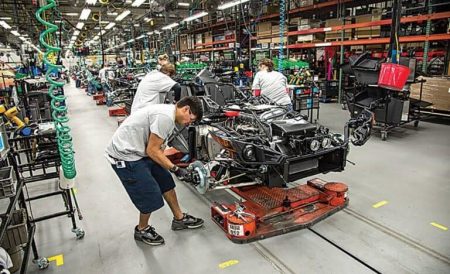
The Evolution of the Modern Assembly Line and Work Positioners
The assembly line that defined 20th-century manufacturing was built for repeatability — but today’s heavy fabrication demands something far more sophisticated.
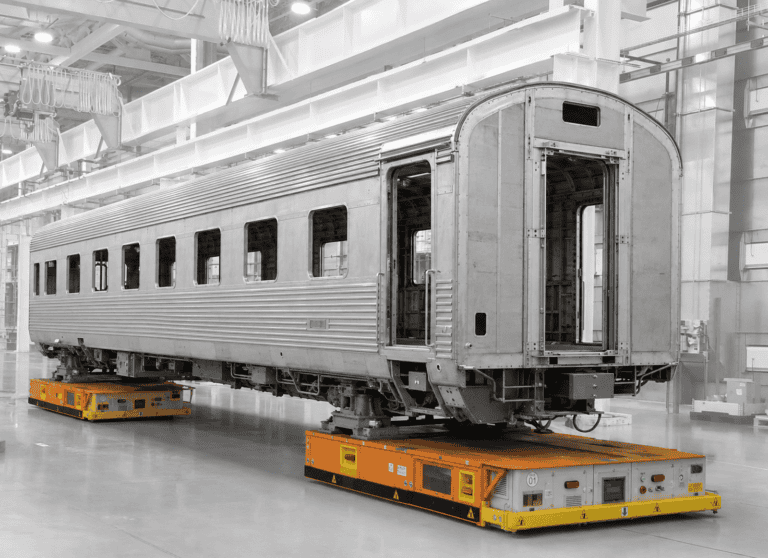
Early production lines were engineered around a simple premise: move the product past stationary workers performing fixed, repeatable tasks. That model worked well for high-volume, low-complexity goods. But modern heavy manufacturing like multi-ton turbine housings, pressure vessels, or aerospace structural components bears almost no resemblance to those origins. Today’s assemblies involve dozens of access angles, complex weld sequences, and strict quality checkpoints that a static bench simply cannot support.
Traditional static assembly is, in many respects, the single greatest constraint on modern throughput. When a workpiece is fixed in one position, workers contort around it — slowing cycle times, increasing error rates, and elevating the physical toll on your team. Modern material handling systems mitigate workplace injuries by reducing human exposure to strenuous tasks and repetitive motions, which means that ergonomic design isn’t just a safety consideration but rather a productivity multiplier.
The shift toward what engineers now call the modern intelligent assembly line inverts the old logic entirely. Rather than moving workers around a fixed part, the workpiece rotates, tilts, and positions itself to meet the operator at the ideal working height and angle. This is where custom-engineered material handling equipment becomes a defining competitive advantage, particularly in high-stakes sectors like aerospace, defense, and energy generation, where a single rework event can cost hundreds of thousands of dollars.
Understanding exactly what these positioning systems are — and how they’re engineered for multi-ton loads — is where we need to go next.
Defining the Industrial Work Positioner for Heavy Loads
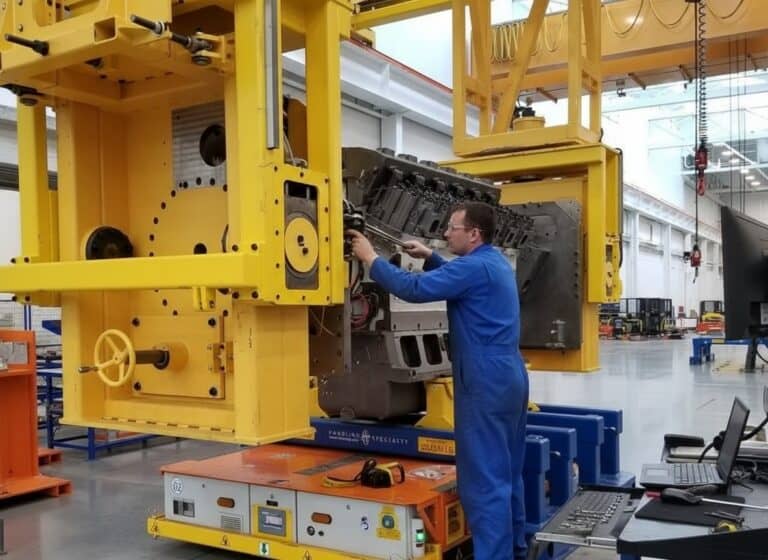
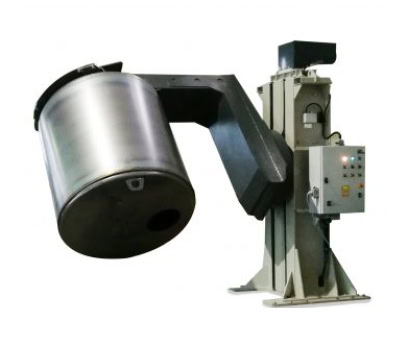
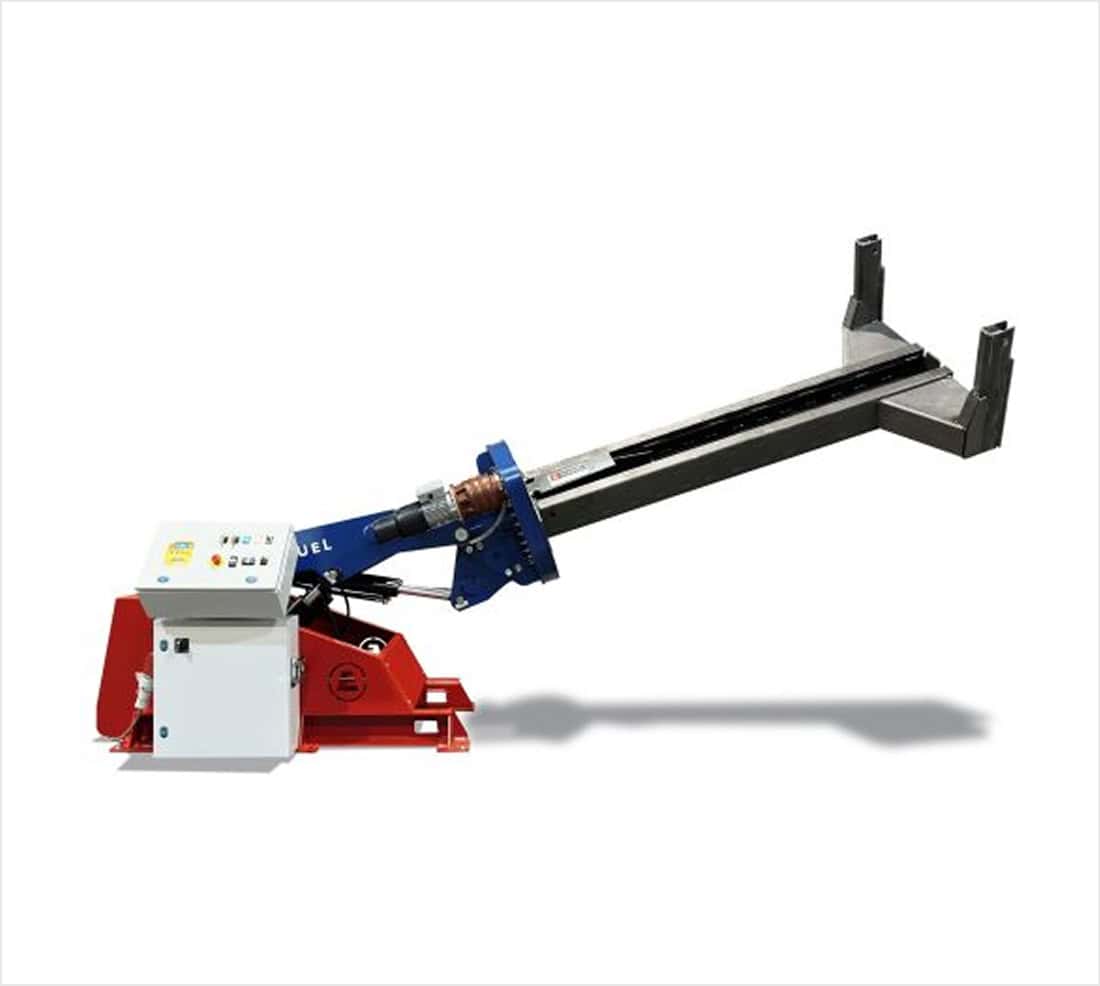
An industrial work positioner is purpose-built to rotate, tilt, and lift heavy workpieces so technicians can access every weld seam, fastener, and assembly point without repositioning themselves around a static fixture.
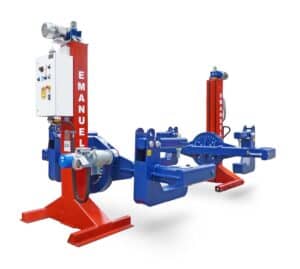
That distinction matters more than it might first appear. In heavy fabrication, a workpiece isn’t a small component you can flip by hand — it might weigh several tons and demand precise angular control throughout a multi-stage assembly sequence. An ergonomic work positioner solves this by bringing the work to the worker, not the other way around.
The category covers several distinct configurations, each engineered for different load profiles and access requirements:
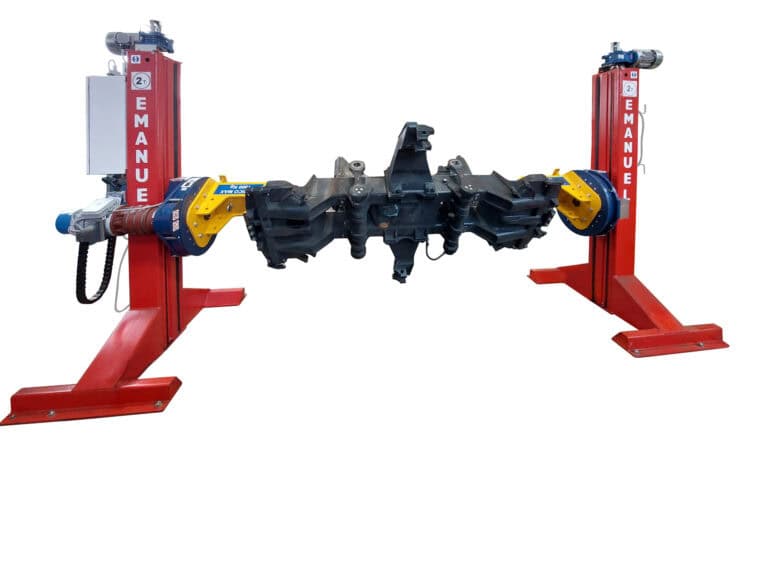
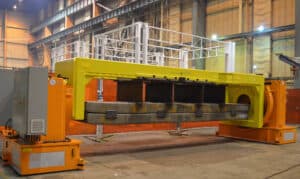
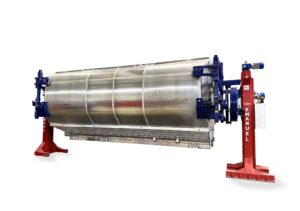
- Headstock/Tailstock Positioners — A two-unit system that supports long or cylindrical workpieces between two driven endpoints, enabling continuous rotation for welding and assembly along the full length of a part. These systems are common in pressure vessel and structural fabrication.
- Skyhook Positioners — Overhead-mounted systems that suspend the workpiece from above, freeing up floor space and allowing technicians to work around all sides. Skyhook and 3-axis positioners allow for complex rotation that standard floor-mounted lifts simply can’t achieve.
- 3-Axis Positioners — Systems capable of simultaneous motion across multiple planes, providing maximum flexibility for complex geometries that require compound angle access.
Heavy-duty capacity — typically defined as multi-ton load ratings — introduces engineering requirements that catalog lifts can’t address. Structural loading, moment arms, center-of-gravity shifts during rotation, and drive torque all scale non-linearly with weight. A custom-engineered positioning system accounts for those specific variables upfront. Off-the-shelf alternatives compromise on geometry, capacity, or both. And that compromise doesn’t just slow production — it creates the physical strain and workflow interruptions that directly affect your team’s performance, a topic the next section addresses in detail.
The Ergonomic ROI: Reducing Mental and Physical Load
When a technician strains to reach an awkward weld seam, the cost isn’t just physical — the cognitive toll quietly undermines precision, slows decision-making, and compounds error risk across an entire shift.
This connection between body position and mental performance is well documented. Awkward postures force the brain to compensate — tracking unstable footing, managing discomfort, recalibrating reach angles — all while executing complex assembly tasks. That divided attention is a direct path to quality failures. Ergonomic workstation optimization can reduce average mental workload by approximately 35%, a meaningful margin in environments where a single missed fastener or misaligned component can trigger costly rework or field failures.
Impact Stat: Ergonomic interventions in manufacturing can reduce risk factors for musculoskeletal disorders by up to 59% — making MSD prevention one of the clearest business cases for investing in purpose-built positioning equipment.
Musculoskeletal disorders remain one of the leading causes of lost work time in heavy manufacturing. Custom engineered positioning systems address this directly by rotating and tilting workpieces to the technician rather than forcing the worker to contort around the part. The result is a more sustainable work posture sustained across a full day and not just the first hour of a shift.
Impact Stat: Quality control gains are hard to overstate. When workers aren’t fighting fatigue, they catch tolerance deviations earlier, apply consistent torque, and maintain focus through repetitive sequences. That’s a direct line from physical comfort to product integrity and is exactly what drives return on investment for facilities that make the switch. The industries realizing these gains span far wider than you might expect, which is where the next section picks up.
Industry-Specific Applications: From Aerospace to Energy
A heavy-duty workpiece positioner isn’t a single-industry solution — it’s a cross-sector platform that reshapes how technicians interact with complex, high-mass assemblies.
The demand for precise, repeatable positioning shows up in virtually every heavy manufacturing vertical. But the specific challenges differ dramatically by sector, and understanding those differences makes clear why versatility and, ultimately, customization matters so much.
Aerospace operations deal with some of the most demanding tolerance requirements in manufacturing. Positioning large fuselage sections or jet engines for precision fastening means any movement has to be controlled, deliberate, and repeatable. A shift of even a few millimeters during assembly can cascade into costly rework. Positioners in this environment need to hold massive components absolutely steady while giving technicians unobstructed access from multiple angles.
Automotive assembly lines face a different pressure: throughput. Frame assembly and EV battery integration require positioners that can keep pace with production cycles without sacrificing accuracy. And with EV battery packs growing heavier and more structurally complex, the load requirements are climbing steadily.
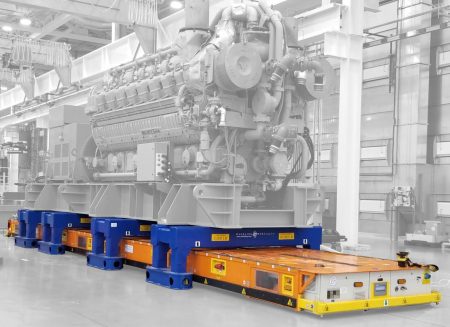
Energy is where sheer scale takes over. Custom work positioners are deployed in power generation environments to handle massive turbines and generator components that would be unmanageable with standard equipment — components that combine extreme weight with precision assembly requirements.
Rail maintenance and assembly present a unique spatial challenge. Bogie workstations that allow 360-degree access let technicians inspect, service, and rebuild wheelsets and suspension components without repositioning the workpiece manually. That full rotational access is what separates a productive workstation from a frustrating one. As you’ll see in the next section, achieving that level of functionality often requires more than an off-the-shelf unit can deliver.
Why Custom Engineering Beats Off-the-Shelf Solutions
Standard equipment simply wasn’t designed for loads that push weight limits, shift center-of-gravity unpredictably, or demand rotation across multiple axes simultaneously.
Off-the-shelf positioners assume a predictable world — uniform load geometry, stable balance points, and controlled environments. But in heavy assembly, that world rarely exists. When a workpiece carries an offset center of gravity, a standard unit can tip, bind, or fail to rotate cleanly, introducing risk rather than eliminating it. Purpose-built solutions for handling heavy loads account for these variables from the first engineering conversation, not as an afterthought.
Workflow integration is another area where generic equipment consistently falls short. A positioner that can’t be positioned where your technicians already work, or that conflicts with your overhead crane envelope, floor rail layout, or assembly sequence creates friction rather than flow. Custom-engineered MHE systems are designed around your shop floor, not the other way around.
Durability under harsh conditions separates engineered solutions from lighter-duty alternatives over the long term. Weld spatter, thermal cycling, hydraulic contamination, and continuous shift operation degrade standard units far faster than purpose-built equipment rated for those exact stressors.
“Engineered durability isn’t a premium — it’s the baseline cost of equipment that performs reliably across a ten- or twenty-year service life in demanding industrial environments.” Says Michael Roper, VP of Sales & Marketing at Handling Specialty Manufacturing.
The collaborative design process is where this value gets built in. Engineering teams work alongside clients to model load scenarios, map floor constraints, and specify drive systems before fabrication begins. That dialogue is what makes the difference between a positioner that fits and one that transforms throughput. When you understand the full scope of what custom engineering delivers, the summary case for it becomes straightforward — and that’s exactly what the next section lays out.
The Bottom Line: What You Need to Know
Custom work positioners aren’t a luxury upgrade — they’re the mechanical foundation that determines whether your heavy assembly operation runs safely, efficiently, and at full quality.
Here’s a quick scan of what the evidence and engineering reality point to:
- Positioners cut MSD risk by 59% and mental workload by 35%. That’s not a marginal gain — it’s a structural shift in how your workforce sustains productivity over time. Ergonomics interventions also correlate with a 25% productivity boost in manufacturing environments.
- Off-the-shelf equipment can’t handle complex centers of gravity. As covered in the previous section, custom engineering is the only path forward when loads are heavy, asymmetrical, or demand precision repeatability.
- Multi-axis rotation is the gold standard. Solutions like the Skyhook positioner and head-and-tailstock systems give technicians 360° access without manual repositioning — eliminating the bottlenecks that slow every stage of assembly.
- Ergonomic positioning is a throughput investment. Reduced rework, fewer injuries, and faster cycle times all trace back to one decision: putting the workpiece exactly where the technician needs it.
And that decision has downstream consequences across your entire shop floor. The question isn’t whether a custom positioner pays for itself, it’s how quickly it does. Getting there starts with an honest look at where your current assembly process is leaving performance on the table.
Optimizing Your Shop Floor for the Future
The shift from manual lifting to automated positioning isn’t just an operational upgrade — it’s a fundamental change in how heavy assembly shops manage risk, throughput, and workforce sustainability.
The evidence is clear: assembly lines that rely on manual repositioning face compounding inefficiencies, from ergonomic strain to bottlenecks that stall downstream production. Research published in Processes confirms that targeted interventions in positioning and workflow layout produce measurable gains in assembly line productivity. And that starts with an honest audit of where your current process breaks down. Walk your floor with a safety-first lens — identify where workers are compensating for equipment limitations, where cycle times inflate because a workpiece can’t be reached at the right angle, and where near-misses happen most often. Those friction points are exactly where a custom work positioner delivers its greatest return.
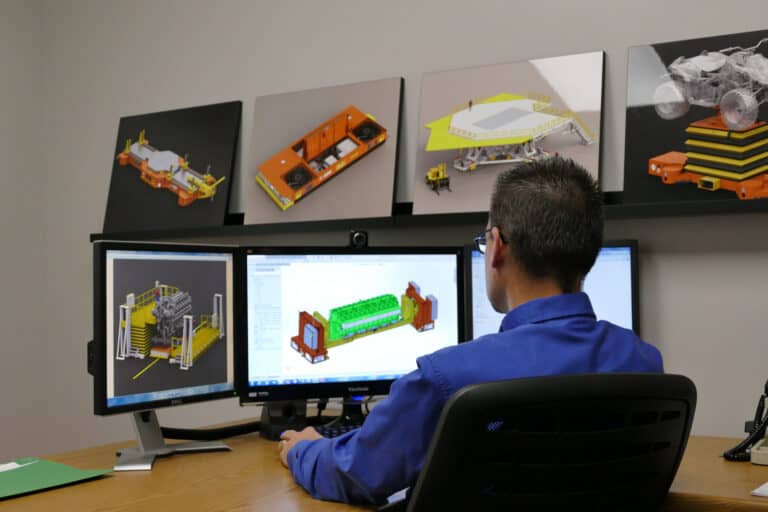
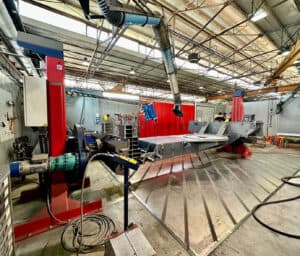
Custom-engineered solutions transform those bottlenecks into controlled, repeatable processes. But achieving that outcome requires a partner with deep experience in complex material handling, not a catalog vendor fitting standard specs to non-standard problems. Handling Specialty provides engineered solutions around your workpiece geometry, weight envelope, and production sequence, whether that means below-the-hook lifting integration or a fully custom head-and-tailstock system designed from first principles.
If your current setup asks your team to work around the equipment rather than with it, that’s the signal. Consult directly with the engineering team at Handling Specialty to design a custom work positioning system tailored to your exact workpiece requirements — and build an assembly floor that’s ready for what comes next.