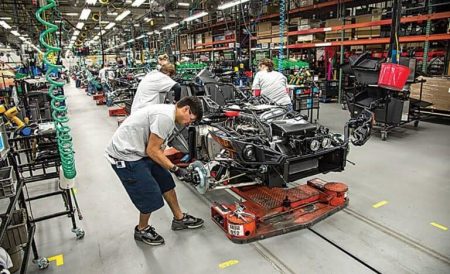
Inefficient material flow doesn’t just slow down production — it quietly drains revenue, puts workers at risk, and erodes competitive advantage at every stage of the manufacturing process.
Material Handling Equipment (MHE) refers to the full spectrum of mechanical and automated systems used to move, store, protect, and control materials across a facility. In a modern factory ecosystem, MHE connects every node of production from raw material intake to finished goods dispatch. When that connective tissue is weak, the entire operation suffers.
Poor material flow is a primary driver of production bottlenecks. When components arrive late to assembly lines, storage retrieval takes longer than scheduled, or workers bridge gaps with improvised manual methods, throughput drops and cycle times balloon. These aren’t isolated inefficiencies. They compound, and the downstream effects, including missed delivery windows and elevated scrap rates, translate directly into measurable financial loss.
The hidden costs of manual handling deserve particular scrutiny. Transportation and material moving occupations accounted for 1,391 workplace fatalities in 2022, which is the highest of any occupational category, according to the Bureau of Labor Statistics. Beyond fatalities, chronic injuries drive up workers’ compensation claims, force unplanned downtime, and fuel turnover in roles that are already difficult to staff. OSHA heavy lifting safety standards exist precisely because these risks are both serious and preventable.
This is where automated material handling and engineered solutions enter the conversation. Rather than layering workarounds onto standard warehouse tools, engineered systems are purpose-built around a facility’s specific material flow requirements. Understanding where that evolution begins, and when manual lifting becomes genuinely untenable is what the following section addresses directly.
Manual vs. Mechanical: When to Stop Lifting by Hand
In high-volume manufacturing, the human body is simply not built to keep pace with production demands — and the injury data underscores this reality.
Manual lifting limits are more consequential than most floor managers realize. The National Institute for Occupational Safety and Health (NIOSH) identifies 35 pounds as a practical upper threshold for manual lifting in high-risk contexts — meaning tasks that involve awkward postures, repetitive cycles, or limited rest time. In a factory environment, those conditions aren’t the exception. They’re the baseline.
Red flag movements compound the risk significantly. Twisting at the waist while holding a load, reaching beyond arm’s length to place a part, and performing the same lift dozens of times per shift are all recognized injury accelerants. Overexertion from manual lifting and carrying reflects not carelessness, but a fundamental mismatch between human capability and industrial workload.
The legal framework reinforces what the ergonomics data already shows. Rather than setting a single universal weight limit, OSHA enforces lifting safety under the General Duty Clause (Section 5(a)(1)), which requires employers to provide a workplace free from recognized hazards.
Bold callout: The General Duty Clause means that if manual lifting is a known injury risk in your facility, failing to address it isn’t just a safety gap but compliance exposure.
This is precisely where automation in manufacturing shifts from a productivity conversation to a risk management imperative. Once a task meets the threshold for recognized hazard, mechanical systems stop being a nice-to-have. Understanding which system fits which task is the next critical question which starts with knowing the core options available.
Comparing the Pillars of Industrial MHE: Conveyors, Forklifts, and Hoists
The three core categories of industrial material handling equipment — conveyors, forklifts, and hoists — each solve a distinct movement problem, and choosing the wrong one for your operation is a costly mistake.
Once you’ve recognized that manual handling has limits, the next decision is which mechanical system actually fits your facility’s load profiles and traffic patterns. Each equipment type has a defined strength, and none is universally superior.
The Rise of Automation: AGVs and Manufacturing Automation Solutions
Automated Guided Vehicles are redefining what’s possible on the factory floor — moving materials with precision, consistency, and zero fatigue.
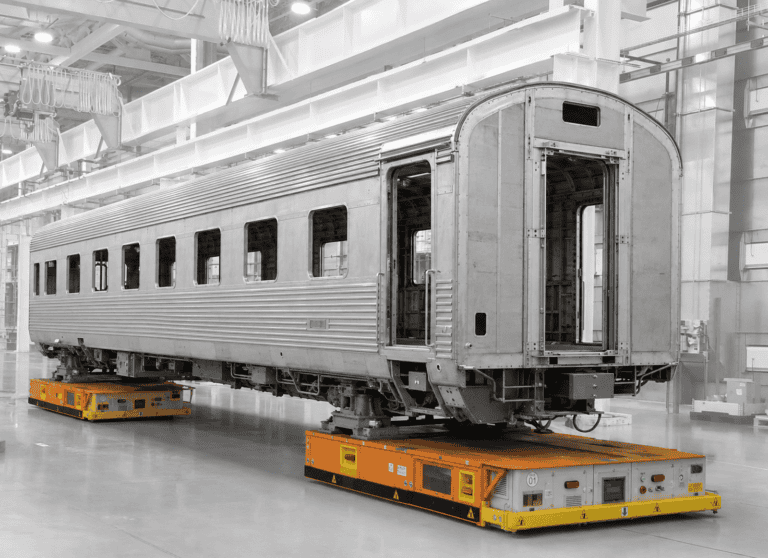
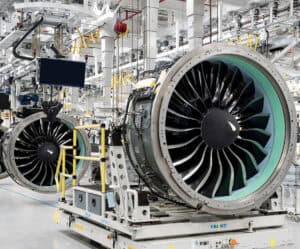
No single piece of traditional equipment answers every challenge as well as Automated Guided Vehicles (AGVs). AGVs are self-guided, software-driven vehicles that transport materials along programmable paths without a human operator at the controls. They’re a cornerstone of modern manufacturing automation solutions, designed to bridge the gap between isolated equipment and a fully integrated production environment.
Throughput consistency is one of the clearest wins AGVs deliver. In practice, human operators, no matter how skilled, introduce variability: fatigue, shift changes, and judgment calls all affect pace. AGVs run on defined logic, maintaining the same cycle times across an entire shift. Automated material handling systems are increasingly used to optimize throughput and reduce the reliance on manual labor in modern warehousing, and this principle also applies to the production floor.
Software integration is what separates AGVs from simply being “driverless forklifts.” Modern AGV systems connect to warehouse management and production control software, enabling real-time tracking of every load, every route, and every handoff point. You get visibility into material flow that a manual operation simply can’t replicate at scale.
The transition from manual forklifts to autonomous handling isn’t always immediate, rather, it’s typically phased, starting with high-repetition routes where ROI is easiest to measure. But once integrated, AGVs don’t just replace operators; they free them for higher-value tasks that still require human judgment. And that shift in workforce role is only sustainable when the underlying safety protocols keep pace with the technology, which is exactly what the next section addresses.
Safety Protocols for Heavy-Duty Material Handling
Sophisticated equipment means nothing if the safety framework around it isn’t just as strong — and in factory material handling, that framework starts with compliance, training, and a culture that treats risk as non-negotiable.
Rigging compliance is often the first place safety gaps appear. OSHA standard 1926.251 sets specific requirements for rigging equipment used in material handling such as covering load ratings, inspection intervals, and proper attachment methods. These aren’t bureaucratic formalities. They’re the difference between a controlled lift and a catastrophic drop. Any facility running hoists, cranes, or overhead lifting systems needs to treat 1926.251 as a baseline, not a ceiling.
Maintenance schedules are equally critical and frequently underestimated. Hoists and heavy-duty movers accumulate stress with every cycle, and deferred maintenance compounds that wear invisibly until something fails. A practical approach is to tie inspection intervals directly to usage data and not just calendar dates so high-frequency equipment gets the attention it actually needs.
Operator training closes the loop. Even a well-maintained, fully compliant system can fail when handled incorrectly. Skilled operators understand load dynamics, recognize early warning signs of equipment fatigue, and know when to stop a lift. That judgment can’t be engineered into hardware.
And beyond individual competency, building a safety-first culture means leadership visibly prioritizes protocols over throughput pressure. When workers feel safe raising concerns without repercussion, near-misses get reported before they become incidents.
Choosing the right equipment is only part of the equation. How you run it matters just as much. That brings us to the practical decisions that tie everything together.
The Bottom Line: Choosing Your Efficiency Path
Selecting the right MHE equipment comes down to three variables: what you’re moving, how often you’re moving it, and what environment it has to survive.
Before committing to any equipment solution, assess your load weight and movement frequency first. These two factors determine whether a standard mechanical solution will serve you or whether you need something engineered specifically for your operation. In practice, facilities that skip this step often end up cycling through equipment upgrades and spending more over time than a well-scoped custom material handling system would have cost upfront.
Ergonomic safety limits draw a clear line in the decision process. Any load that exceeds those limits – OSHA’s guidance places the recommended manual lift threshold well below what most industrial tasks demand – should immediately shift toward a mechanical or automated solution. No productivity gain justifies putting workers at risk of musculoskeletal injury.
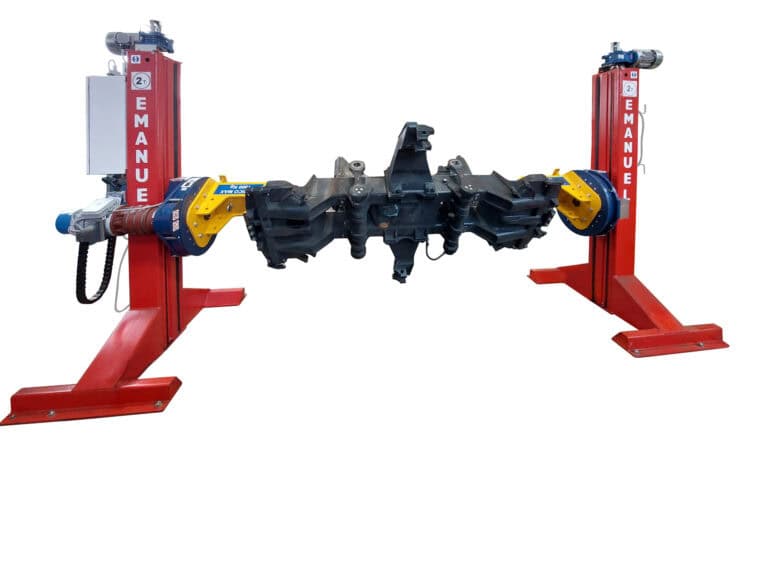
Custom-engineered systems aren’t a premium option reserved for limited cases. They’re the practical choice when you’re operating in harsh environments, handling non-standard loads, or running high-frequency cycles that off-the-shelf equipment simply wasn’t designed for. And whatever equipment path you choose, cross-referencing those decisions against OSHA 1910.176 General Duty requirements isn’t optional, it’s the baseline.
Here’s what that decision framework looks like in practice:
- Assess load weight and movement frequency before evaluating any equipment category.
- Treat ergonomic safety thresholds as hard limits — not guidelines — when specifying equipment.
- Choose custom-engineered systems whenever environmental conditions or load profiles fall outside standard parameters.
- Validate every equipment decision against OSHA General Duty requirements before deployment.
- View upfront engineering investment as a long-term cost reduction, not an added expense.
Getting this right isn’t just about equipment specs — it’s about building a material handling strategy that scales with your operation. That’s where the real engineering conversation begins.
Engineering the Future of Your Factory Floor
Standard material handling solutions are designed for average conditions and most complex manufacturing environments are anything but average.
Off-the-shelf equipment makes reasonable assumptions about load weights, travel paths, and throughput demands. But when your operation involves irregular workflows, constrained floor space, or specialized payloads, those assumptions start to break down. The gap between what generic equipment offers and what your facility actually needs is precisely where inefficiency takes root.
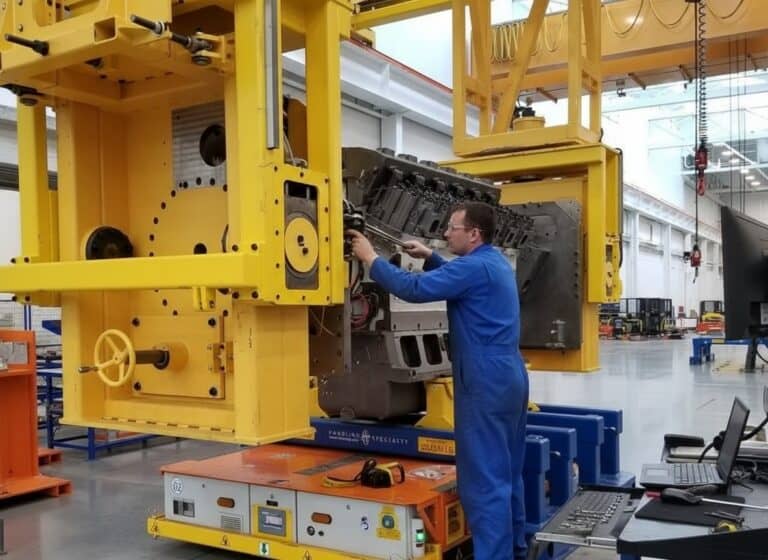
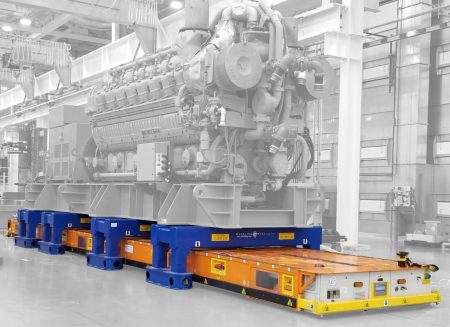
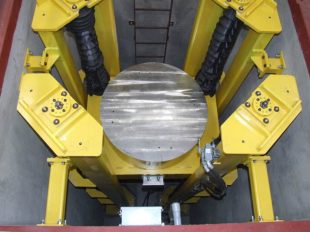
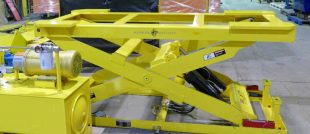
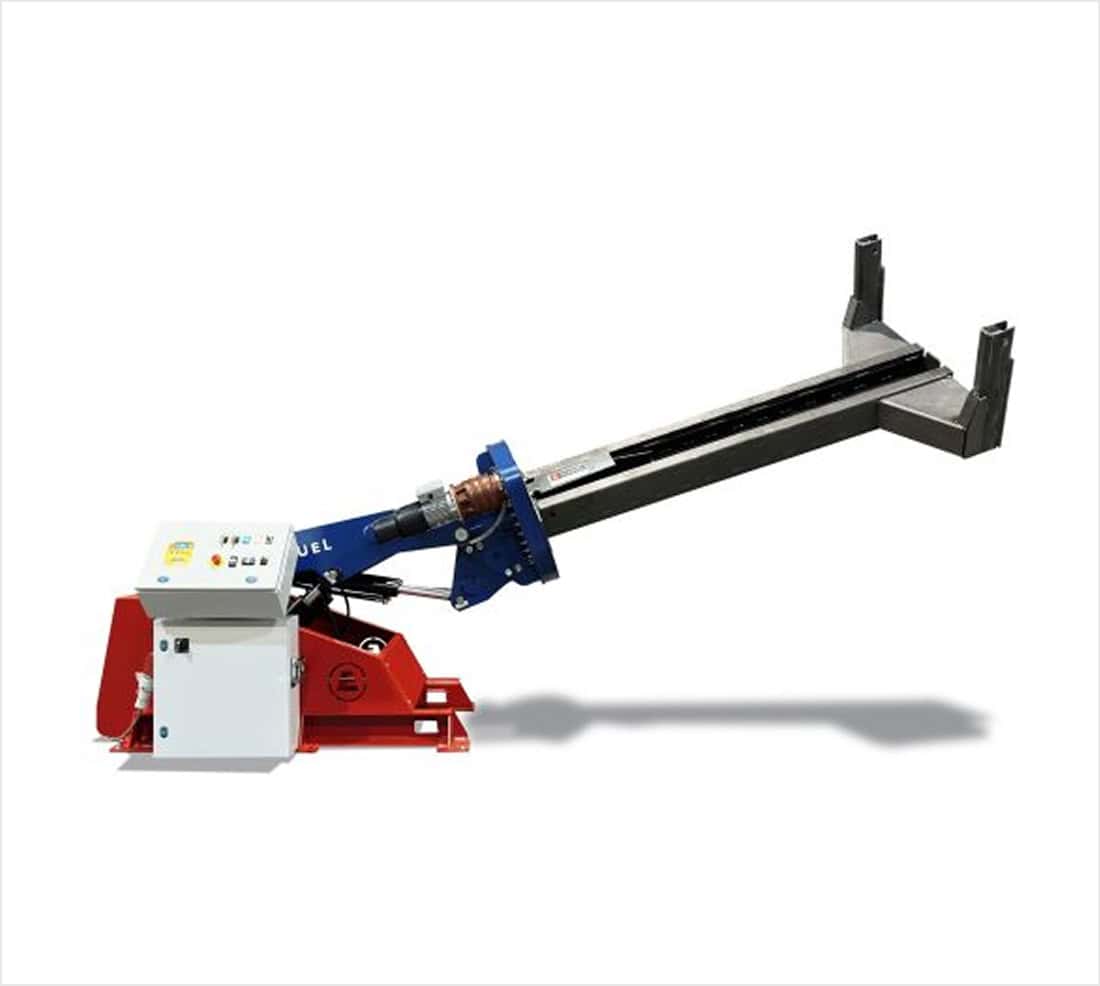
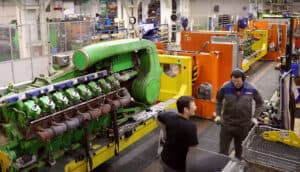
Automotive, aerospace, energy, rail and other advanced industries recognize this fact and choose custom MHE when procuring MRO, assembly and manufacturing material handling systems.
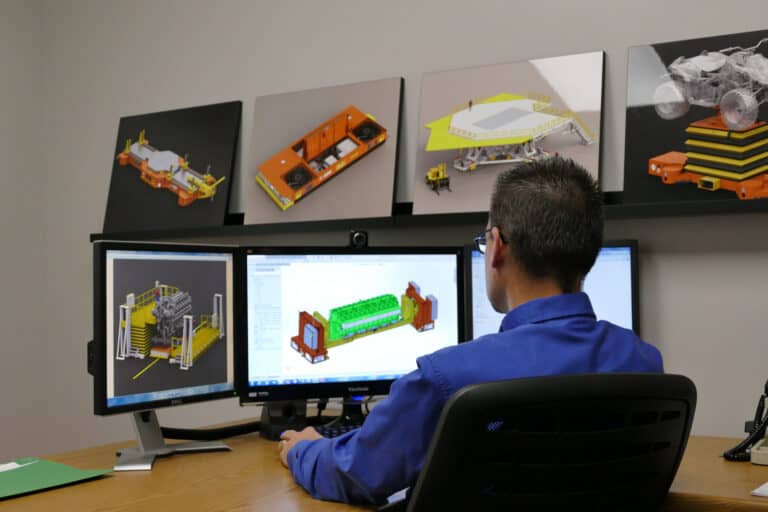
Consultation-first design is important. Before specifying any equipment, a thorough engineering review of your current system and its traffic patterns, bottleneck points, load characteristics etc., gives you a clear picture of where standard solutions are costing you time, labour, and risk. That diagnostic process is where upgrades go from reactive to strategic.
And perhaps the most durable insight from that process is this: efficiency is rarely a standalone goal. It’s a byproduct of well-engineered safety. Lifting heavy objects safely requires equipment that’s matched to the task and not simply the closest available option. When the right MHE is in place, throughput improves because workers aren’t compensating for equipment that wasn’t built for the job.
If your current material handling system was designed around yesterday’s production demands, it may already be limiting what tomorrow’s floor can achieve. Now is the right time to evaluate where the gaps are and engage a qualified engineering team like Handling Specialty to design a system built around your operation and not the other way around.