How Multi-Axis Custom Work Positioners Streamline Industrial Assembly Processes
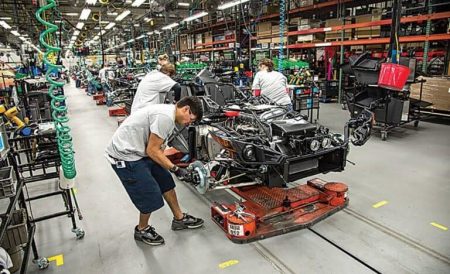
In the high-speed environment of modern industrial manufacturing, the limitation of a product’s throughput is often not the speed of the robotic arm or the precision of the CNC machine, but the orientation of the workpiece itself. Static jigs and rudimentary clamps have long served as the industry standard, yet they represent a significant bottleneck in complex, high-tolerance assembly. As manufacturers push toward increasingly sophisticated designs, the ability to dynamically manipulate workpieces is shifting from a luxury to a fundamental requirement. Multi-axis custom work positioners act as the essential bridge between raw material and finished high-precision component, transforming how factories orchestrate their production workflows.
Moving Beyond Static Jigs: The Evolution of Industrial Workpiece Positioning
The Limitations of Manual Repositioning and Single-Axis Systems
Manual repositioning introduces significant variables into the assembly process. Every time an operator stops to flip, rotate, or re-clamp a part, the cycle time suffers, and the potential for positional error increases. Single-axis systems, while useful for basic rotating tasks, often fail to provide the multidimensional access required for modern, complex geometries. These systems tether the workpiece to a fixed plane, forcing robots and human operators into awkward reach-arounds that compromise both cycle times and output quality.
Defining the Multi-Axis Advantage: From 3-Axis to Hexapod Systems
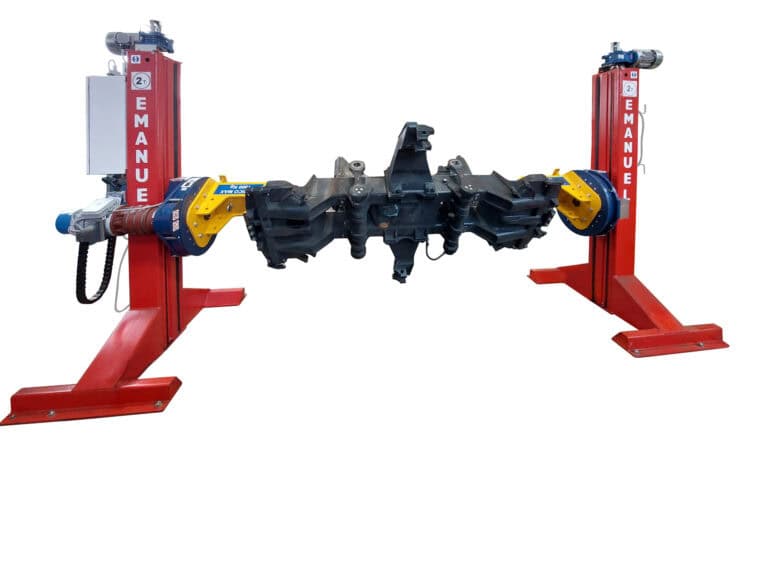
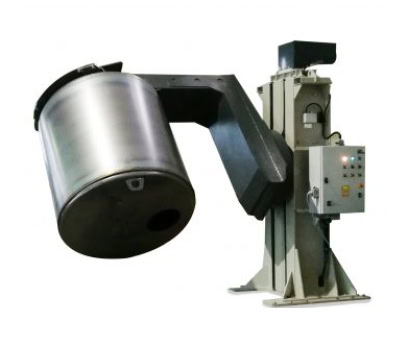
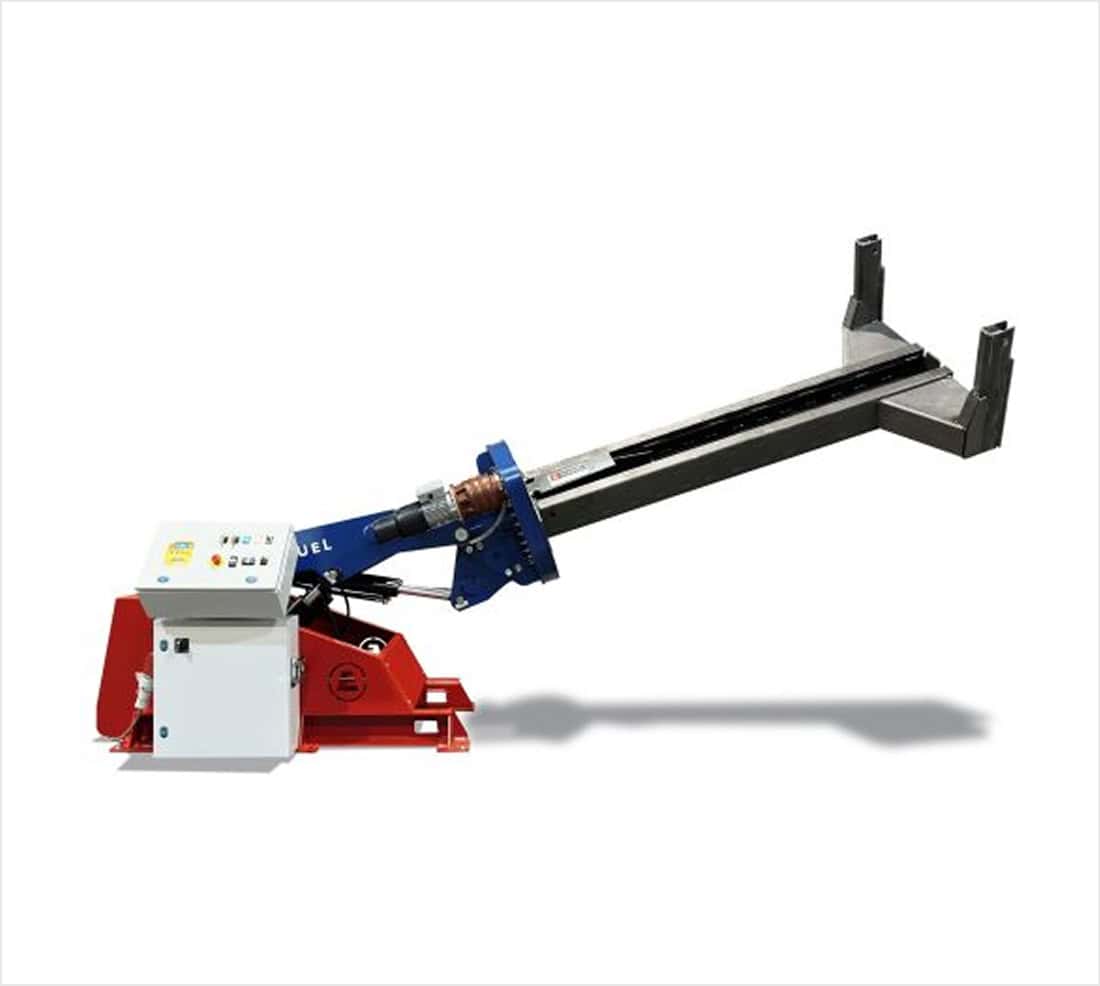
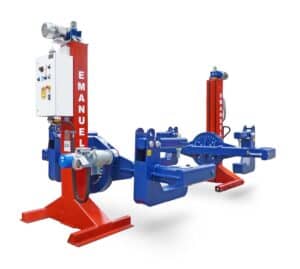
Multi-axis positioners move beyond the simple rotation of a headstock tailstock positioner or a basic trunnion. By incorporating advanced motion control, these systems allow for the fluid adjustment of a workpiece across multiple degrees of freedom. From simple 3-axis rotary-tilt configurations to advanced 6-axis parallel kinematics (hexapods), these positioners ensure that the part is always perfectly aligned with the tool. This fluidity allows for optimal access to difficult-to-reach features without the need for multiple, error-prone setups.
The “Waste of Motion” in Lean Manufacturing: Identifying Assembly Bottlenecks
In Lean manufacturing, “waste of motion” refers to any unnecessary movement that does not add value to the product. Static jigs force constant movement from operators and robotic arms to accommodate fixed orientations. By automating the positioning process, manufacturers eliminate the non-value-added time spent maneuvering parts, creating a streamlined, continuous assembly flow that maximizes throughput.
Kinematics for Complex Geometries: Matching Machine Architecture to the Task
Serial Kinematics vs. Parallel Kinematics: Choosing Between Gantry Systems and Stewart Platforms
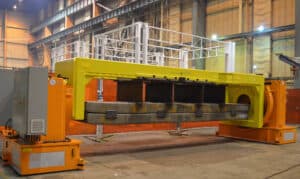
Selecting the right architecture is critical. Serial kinematics, typically seen in modular gantry-style positioners, excel in scalability and travel range, making them ideal for large-scale, heavy-duty assemblies. Conversely, parallel kinematics—often configured as Stewart platforms—offer superior stiffness and payload-to-weight ratios. Their ability to manipulate a “pivot point” in space makes them the preferred choice for tasks requiring extreme precision in small, compact spaces.
Handling Complex Geometries: Turbine Blades, Impellers, and Aerospace Components
Aerospace and Power-generation components present some of the most difficult positioning challenges due to their highly non-linear, organic shapes. Achieving the required finish on a turbine blade or an impeller requires a positioner that can hold the part with absolute rigidity while moving it in perfect sync with the cutting tool or weld head. Multi-axis systems ensure that these complex geometries remain within the tightest tolerance envelopes, preventing the vibration and chatter that often plague traditional setups.
The Engineering of Accuracy: How Motion Control Translates to Tight Tolerances
The Role of Encoder Resolution and Servo-Driven Auxiliary Axis Systems
Precision is a function of feedback. Modern positioners utilize high-resolution encoders on every axis, providing real-time positional data that allows the controller to compensate for deviations instantly. By integrating servo-driven auxiliary axis systems, these positioners achieve a level of synchronized motion that ensures the workpiece is always exactly where it needs to be, down to the micron.
Mitigating Joint Precision Errors with Custom Bearing Configurations
In any multi-axis work positioner system, the joints are the primary source of mechanical slop. Using custom, high-stiffness bearing configurations—such as cross-roller or angular contact bearings—mitigates backlash and ensures that the system maintains its rigidity under heavy loads. This structural integrity is paramount when performing 5-axis machining or intricate welding, as it prevents the mechanical “drift” that leads to cumulative errors.
Volumetric Positioning and Geometric Accuracy in Multi-Axis Systems
Volumetric positioning refers to the system’s ability to define the workpiece’s location within a 3D coordinate space accurately. By mapping the volumetric workspace and compensating for systemic mechanical tolerances in software, multi-axis work positioners achieve a degree of accuracy that matches the sophisticated needs of high-speed automation. This ensures that regardless of the orientation, the part-to-tool relationship remains consistent.
Maximizing Throughput through Synchronized Workflow Orchestration
Programmable Positioning Sequences: Reducing Idle Time Between Assembly Steps
Throughput is maximized when the positioner operates as an active partner in the assembly sequence. By programming complex, multi-step positioning routines, manufacturers can transition between welding, grinding, and inspection tasks in a single cycle. This orchestration minimizes the idle time that typically occurs as the system awaits manual re-indexing.
Eliminating Redundant Setups with Multi-Axis Robotic Weld Positioners
Redundant setups are the enemy of efficiency. Multi-axis robotic weld positioners allow a robot to weld an entire complex assembly from a single mounting, eliminating the need to stop and reposition the part. By presenting the workpiece in an optimal orientation, the system ensures that the robot can perform continuous, high-quality seams without interruption.
Achieving the “Flat Position Advantage” for Optimal Weld Penetration and Speed
Welding in the “flat position” is the gold standard for weld penetration and speed. Gravity aids the weld pool, resulting in a cleaner, more structural joint. Multi-axis positioners allow the part to rotate continuously to maintain this flat position throughout the entire seam, significantly improving the metallurgical quality and reducing the need for post-weld grinding.
Enhancing Ergonomics and Operator Safety in Heavy-Duty Assembly
Reducing Worker Fatigue through Adaptive Work Heights and Orientation
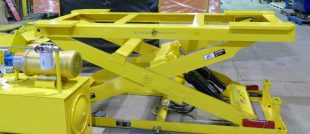
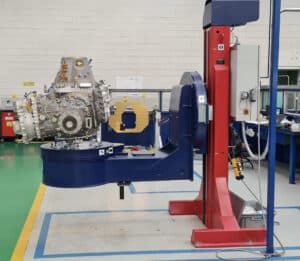
Even in highly automated environments, operator interaction is required. Adaptive work heights and tilt angles—often called “ergonomic positioning“—allow workers to perform manual tasks without bending or straining. By bringing the work to the operator, companies see a measurable decrease in fatigue-related errors and workplace injuries.
Safety Interlocks and Limit Switches: Protecting the Operator and the Workpiece
Safety is non-negotiable. Custom work positioners for assembly integrate multiple layers of protection, including hardware limit switches and software-based safety interlocks. These features prevent the positioner from entering a forbidden workspace or over-rotating into fixed obstacles, ensuring that both the operator and the expensive assembly remain safe from collisions.
Improving Accessibility: Better Surface Finish and Lower Defect Rates through Proper Ergonomic Positioning
Accessibility directly impacts quality. When an operator can easily reach every angle of a part, they are more likely to achieve a uniform surface finish. By positioning the part in a way that provides ideal ergonomic access, the likelihood of human-induced defects—such as uneven grinding or missed inspection points—is drastically reduced.
Material-Specific Considerations: Weight, Rigidity, and Load Capacity
Managing High-Load Capacities for Heavy Manufacturing and Aerospace Alloys
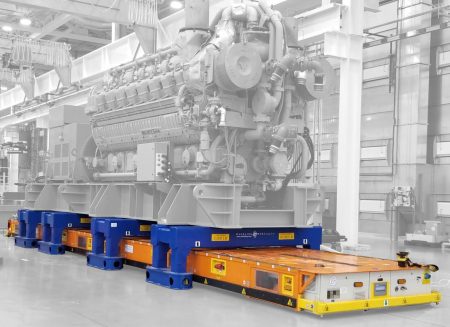
Heavy-duty manufacturing requires positioners that can handle massive payloads without sacrificing precision. Using high-strength alloys and advanced drive systems, custom positioners can manage hundreds of kilograms of steel or titanium, ensuring that even the heaviest components are positioned with millimeter-scale accuracy.
Maintaining Static Accuracy under Dynamic Loading Conditions
The true test of a positioner is its ability to maintain accuracy while under load. Through the integration of advanced actuators and rigid structural design, these systems resist the dynamic forces generated by robots and tools, ensuring that the part does not deflect or shift during the manufacturing process.
The Economic Case: Calculating ROI and Long-Term Production Performance
The implementation of multi-axis custom work positioners represents a strategic investment in the future of the factory floor. While the initial capital expenditure is higher than that of a static fixture, the return on investment is realized through drastically reduced cycle times, a lower defect rate, and improved labor efficiency. By eliminating manual setups and optimizing the part-to-tool interface, companies can transition from “getting the job done” to achieving a consistent, high-performance output that stands out in a competitive market.
Ultimately, the choice to adopt multi-axis positioning is a commitment to precision and agility. As industries move toward smaller batches and higher customization, the ability to rapidly and accurately reconfigure the assembly orientation will define the leaders of the next generation of manufacturing. Manufacturers who invest in these technologies today position themselves not just to meet current production demands, but to adapt fluidly to the unknown requirements of the next technological era. By synchronizing motion, optimizing ergonomics, and integrating intelligent connectivity, the modern work positioner is no longer just an accessory—it is the heartbeat of the assembly line.